Lake Garda Ferry Guide: Routes, Timetable Seasons, Prices And Day Passes
The Lake Garda ferry is the state-run boat network that strings together 28 landing stages from Sirmione to Riva del Garda, with one-way fares from 1.50 euro for an urban hop up to 17.50 euro for the full lake.
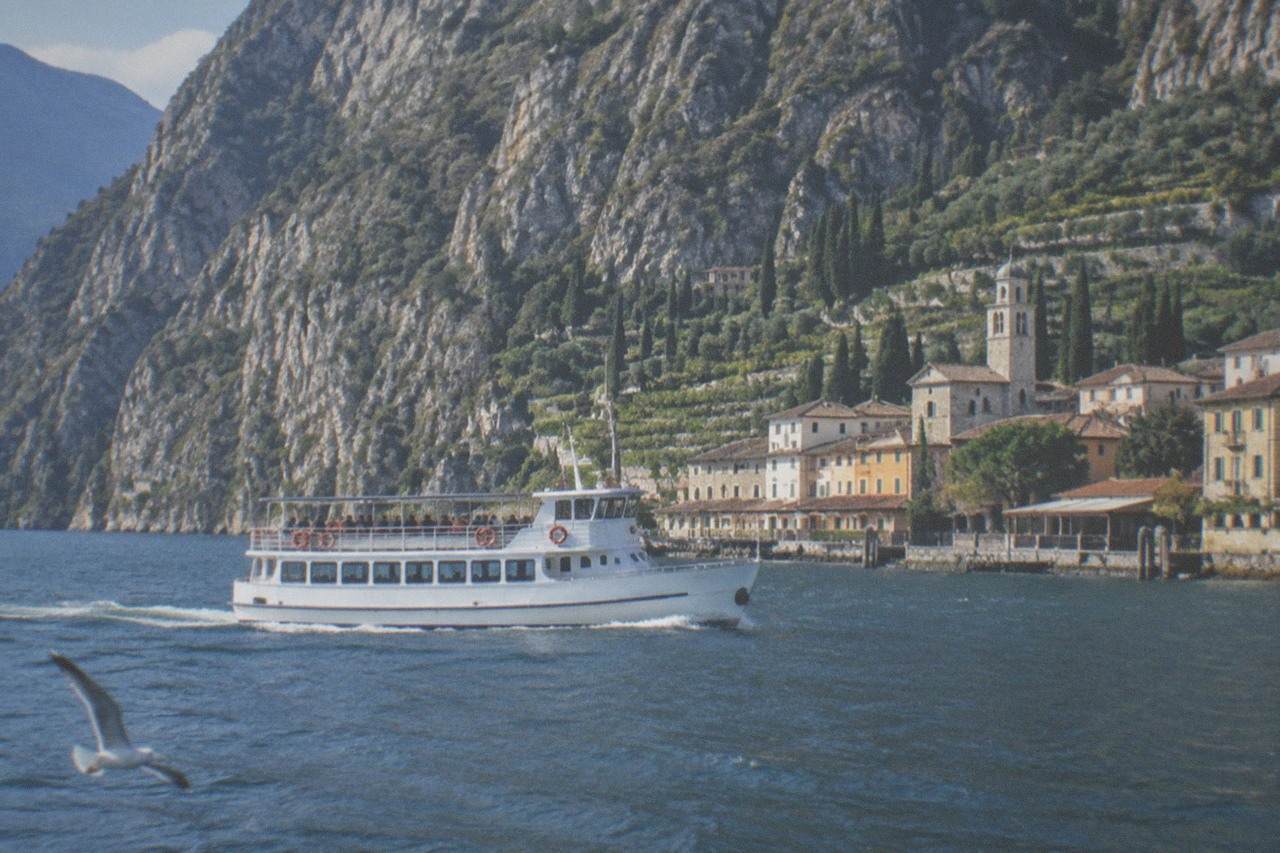
Short answer
The Lake Garda ferry is run by Navigazione Laghi, the state operator, from 28 landing stages. One-way adult fares run from 1.50 euro for an urban hop to 17.50 euro by section. Day passes cost 39.50 euro for the whole lake or 23.50 euro for a single zone, and the only car crossing is the Maderno to Torri del Benaco ferry.
The Lake Garda ferry network is the single most useful boat system on the lake, and also the most misunderstood. Run by Navigazione Laghi, the state operator under the Ministry of Infrastructure and Transport, it connects 28 landing stages with scheduled passenger boats, fast services and one car ferry. The fare system is sectional: you pay by the distance band between your departure and arrival port, not by a flat rate, and the difference between a two-minute hop and a full-lake crossing is more than a tenfold spread. This guide lays out the routes, the 2026 tariff, the day passes and the seasonal timetable, all read from the operator's own tariff sheet and timetable pages.
How Does The Lake Garda Ferry Work?
The Lake Garda ferry is a scheduled public boat service run by Navigazione Laghi, the state operator, from an operating office in Desenzano del Garda. It serves 28 landing stages with ordinary passenger boats, catamarans and fast services, plus one car ferry between Maderno and Torri del Benaco. Fares are charged by section, and tickets are checked on board.
Think of it as a bus network on water. Boats depart on a published timetable, call at landing stages in sequence, and take walk-on passengers with no reservation for ordinary services. The fleet mixes older motor vessels with newer hybrid units: the historic motonave Zanardelli, built in 1903 by the Escher shipyards in Zurich, still sails the lake with its original art-nouveau furnishings, while the Adamello returned to service at the start of the 2026 season converted to hybrid-electric propulsion. The network is not a tour. Nobody narrates the scenery, there is no aperitif, and the boats stop where the timetable says they stop.
Two practical rules shape every trip. Places are limited to the maximum capacity of the vessel, so a busy August afternoon sailing can genuinely fill, and tickets bought on board carry a 1.00 euro surcharge per passenger, per luggage item or per vehicle. That surcharge is waived when the ticket office at the landing is closed, which happens at some smaller piers in shoulder season. Buying at the office or a machine before boarding is both cheaper and faster.
The distinction between this network and the private tours that depart from the same harbours matters for planning. A cruise with lunch, a sunset aperitivo run or a private charter is a different product with a different price logic, covered elsewhere on this site. The ferry exists to move people, and it does that job at a fraction of tour prices.
Which Towns Have A Landing Stage?
The 2026 fare matrix lists 28 landing places: Desenzano, Sirmione, Padenghe, Moniga, Manerba, Portese, Salò, Gardone, Fasano, Maderno, Bogliaco, Gargnano, Tignale, Campione, Limone, Riva, Torbole, Malcesine, Assenza, Brenzone, Castelletto, Pai, Torri, Garda, Bardolino, Cisano, Lazise and Peschiera. Limone and Malcesine each appear twice, once for the car ferry.
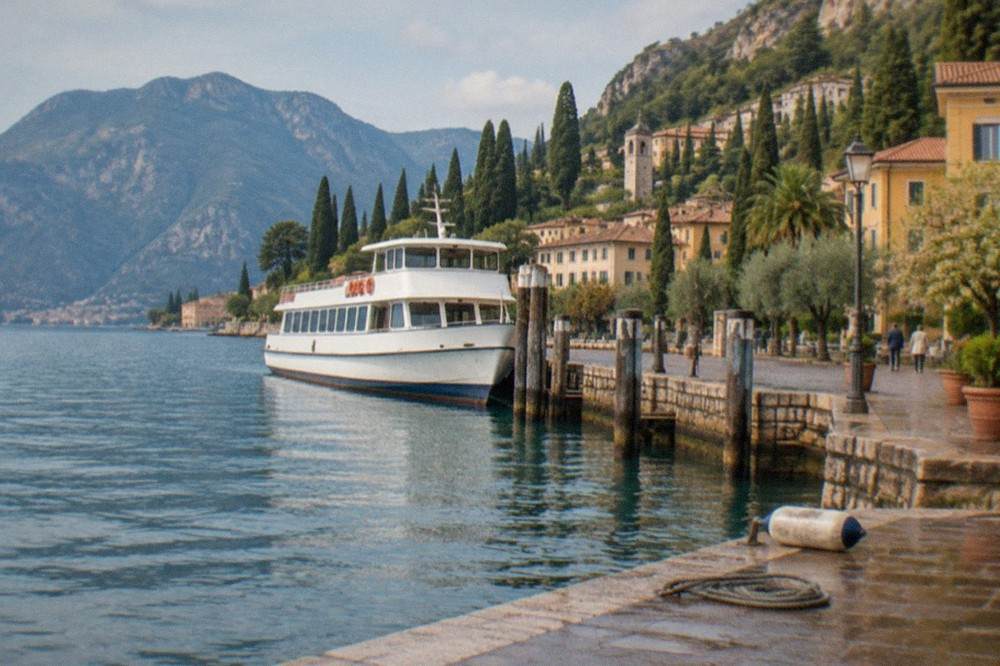
That coverage is the reason the lake is genuinely doable without a car. The southern basin is dense with stops: Desenzano, Sirmione, Peschiera, Lazise, Bardolino and Garda all sit within roughly an hour of each other by ordinary boat, which makes multi-town hopping easy. The western shore strings Salò, Gardone, Maderno, Gargnano and Limone up toward Riva, while the eastern shore runs Malcesine, Brenzone, Torri and Pai down to Garda. The full list, with the fare section each pair falls into, is on the operator's fares page.
Not every stage is served by every sailing, and that is where the ferry map question trips people up. The map of the network is simple, a single loop around the shoreline with a few cross-lake links, but the timetable decides what you can actually ride. A crossing such as Desenzano to Sirmione takes about 20 to 25 minutes on the summer timetable, and the operator's own sheet is the only reliable source for any crossing time. Journey-planner estimates circulating online do not match the published timetable and should be ignored.
If you are weighing the ferry against hopping between towns by tour boat, the shared cruises fill a different gap: they run a loop with a guide rather than a point-to-point service. The half-day cruise from Peschiera del Garda, for instance, rates 4.4 from 849 reviews and costs from $72.30 per person with lunch included, a different proposition from the 6.00 euro ordinary crossing from Peschiera to Sirmione.
For travellers building a whole day around the boat network rather than a single crossing, the car-free Lake Garda itinerary guide works through the connections town by town, and the question of whether you need to book a ferry in advance has its own answer: ordinary services are turn-up-and-go, and only capacity limits bite in peak weeks.
How Much Is A One-Way Ticket?
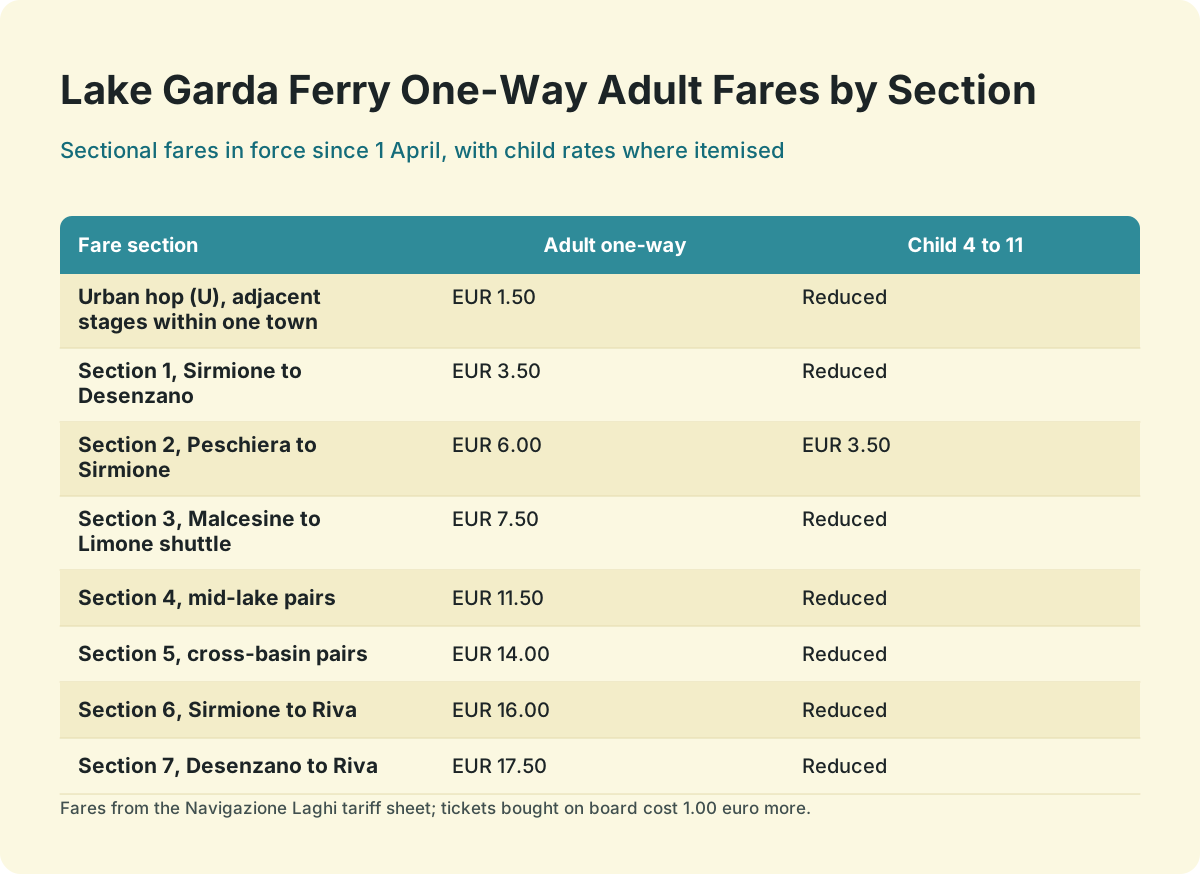
One-way adult fares run in seven sections plus an urban rate: 3.50 euro in section 1, 6.00 in section 2, 7.50 in section 3, 11.50 in section 4, 14.00 in section 5, 16.00 in section 6 and 17.50 in section 7, with 1.50 euro for an urban hop. Sirmione to Desenzano costs 3.50 euro and Sirmione to Riva 16.00 euro.
The section is found by crossing your departure port against your arrival port in the tariff matrix, and the operator's worked example is printed on the sheet itself: Sirmione to Riva equals fare section 6. Reduced fares exist for seniors, residents and groups at the 1.20 tariff level, and for children aged 4 to 11 at the 1.50 level; a section 2 crossing that costs an adult 6.00 euro costs a child 3.50 euro. Children under 4 travel free provided they do not occupy a seat, with one adult per three children.
| Fare section | Example crossing | Adult one-way | Child 4 to 11 |
|---|---|---|---|
| Urban hop (U) | Adjacent stages within one town | EUR 1.50 | Reduced |
| Section 1 | Sirmione to Desenzano | EUR 3.50 | Reduced |
| Section 2 | Peschiera to Sirmione | EUR 6.00 | EUR 3.50 |
| Section 3 | Malcesine to Limone shuttle | EUR 7.50 | Reduced |
| Section 4 | Mid-lake pairs | EUR 11.50 | Reduced |
| Section 5 | Cross-basin pairs | EUR 14.00 | Reduced |
| Section 6 | Sirmione to Riva | EUR 16.00 | Reduced |
| Section 7 | Desenzano to Riva | EUR 17.50 | Reduced |
The child column follows the tariff sheet's reduced bands, and the exact child figure is printed only for the sections the sheet itemises, so treat the unpriced rows as "check the sheet" rather than a number. One warning that saves money: tickets bought on board cost 1.00 euro more per passenger, per piece of luggage or per vehicle, unless the landing's ticket office is closed. The fares came into force on 1 April 2026 and are published on the operator's 2026 tariff sheet, which stays the primary record for every price on this page.
A few discount layers sit on top of the base fare. Guests at participating accommodation can be issued a free Garda Promotion Card, which reduces ordinary and day tickets for up to two people for three days, though it does not apply to rapid supplements or special cruises. A combined train-plus-boat day pass sold with the rail operator covers the Basso Lago zone at 21.60 euro instead of the 27.00 euro standalone day pass, valid through the season. The full breakdown of ferry costs works through these layers in more detail.
Is A Day Pass Worth It?
A whole-lake day pass costs 39.50 euro for an adult, against 23.50 euro for a single-zone day pass and 27.00 euro for the upper or lower lake. The whole-lake pass includes fast services; the zonal passes cover ordinary routes only, with a supplement to board a fast service. A day pass pays for itself at roughly three section 6 or 7 crossings.
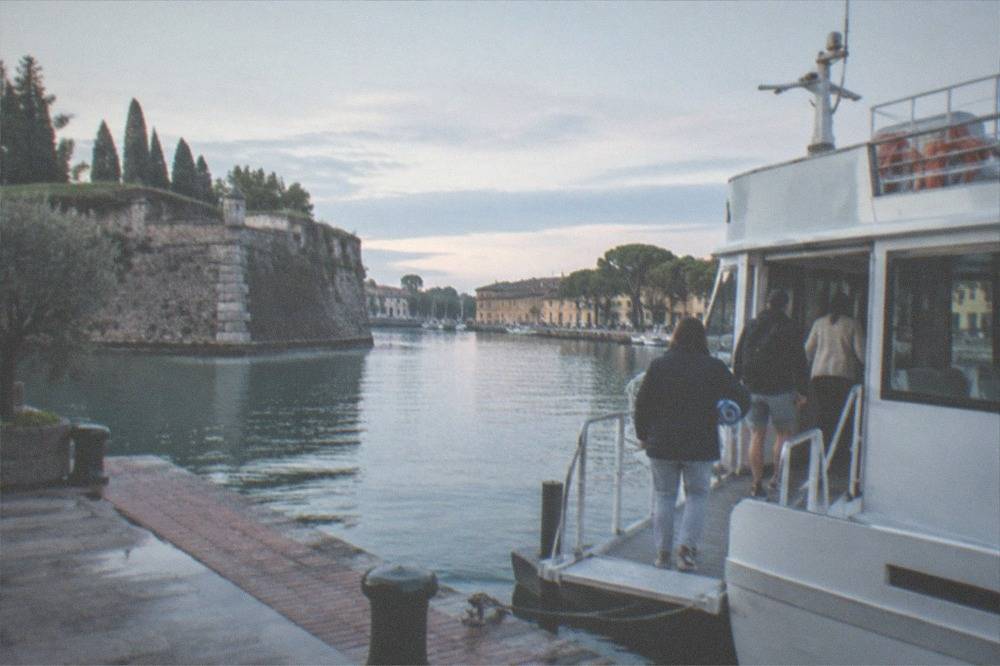
The arithmetic depends entirely on how many legs you ride. Two section 2 crossings cost 12.00 euro in singles, well under any pass. A plan that strings Sirmione to Riva (16.00 euro), Riva to Limone and Limone to Malcesine in one day already exceeds the 39.50 euro whole-lake pass, and the pass removes the queue-and-buy friction at every landing. Three-day versions exist at every level: 79.00 euro whole lake, 54.00 euro upper or lower lake, and the zonal equivalents.
| Pass, 1 day | Adult | Groups and seniors | Children 4 to 11 |
|---|---|---|---|
| Whole lake, fast services included | EUR 39.50 | Reduced | Reduced |
| Upper lake or lower lake | EUR 27.00 | Reduced | Reduced |
| Single zone (North, Center, West or Est) | EUR 23.50 | Reduced | Reduced |
The reduced columns follow the tariff sheet's group and child bands, and the exact figures sit on the printed sheet, so treat them as "check the sheet" rather than a number quoted here. The zones have exact geographic meanings on the tariff sheet: the upper lake runs from Maderno and Torri northward, the lower lake from Gargnano and Torri southward, and the four single zones slice the lake into North (Campione and Assenza northward), Center (Limone and Malcesine down to Maderno and Torri), West (Maderno to Sirmione on the western shore) and Est (Torri to Sirmione on the eastern shore). A single-zone pass is rarely the right buy for a tourist unless you are based in one town and making short local loops.
One genuinely useful integrated ticket exists for bus-plus-boat days: the Gardapass, at 33.50 euro for 24 hours, covers unlimited Arriva buses and Navigazione Laghi boats together. For a plan that mixes a ferry leg with shore transport, it undercuts buying the two networks separately. The hop-on-hop-off boat question is answered by exactly these day passes: there is no dedicated tourist hop-on-hop-off vessel, but a free-circulation ticket turns the ordinary network into one.
What Is The Fast Service And Its Supplement?
Fast services, marked Sr on the timetable, are the aliscafo and catamaran sailings that skip intermediate stops. Boarding one requires the ordinary fare plus a per-section supplement, which the tariff sheet lists on a scale from 2.50 to 6.00 euro. Day passes other than the whole-lake pass require the same supplement.
The supplement exists because the fast boats cut real time off long crossings, and the operator prices that time separately. The tariff sheet confirms both the existence of the supplement and its range, but the exact per-section figures in the extracted sheet are not unambiguously labelled, so treat 2.50 to 6.00 euro as the band and check the supplement column on the printed sheet for your specific crossing. What is verified beyond doubt is the rule itself: travellers boarding a rapid service must hold the specific supplement alongside their ticket. The rest of the planning pages sit on Lake Garda Boat Tours.
In practice, fast services matter most on the long north-south runs. A whole-lake day pass includes them, which is a quiet reason to pay the 39.50 euro rather than 27.00 euro if your plan includes any Sr sailing. On short southern hops the fast services often do not call at your stop at all, so the question answers itself.
Can You Take A Car Across The Lake?
Yes, but only on one link: the car ferry between Maderno and Torri del Benaco, on the west and east shores of the lake's narrow waist. Passenger fares are 7.50 euro per adult, and vehicles pay from 9.20 euro for a bicycle up to 25.00 euro for a camper, with the driver included in the vehicle fare. No passenger boat on the network carries vehicles.
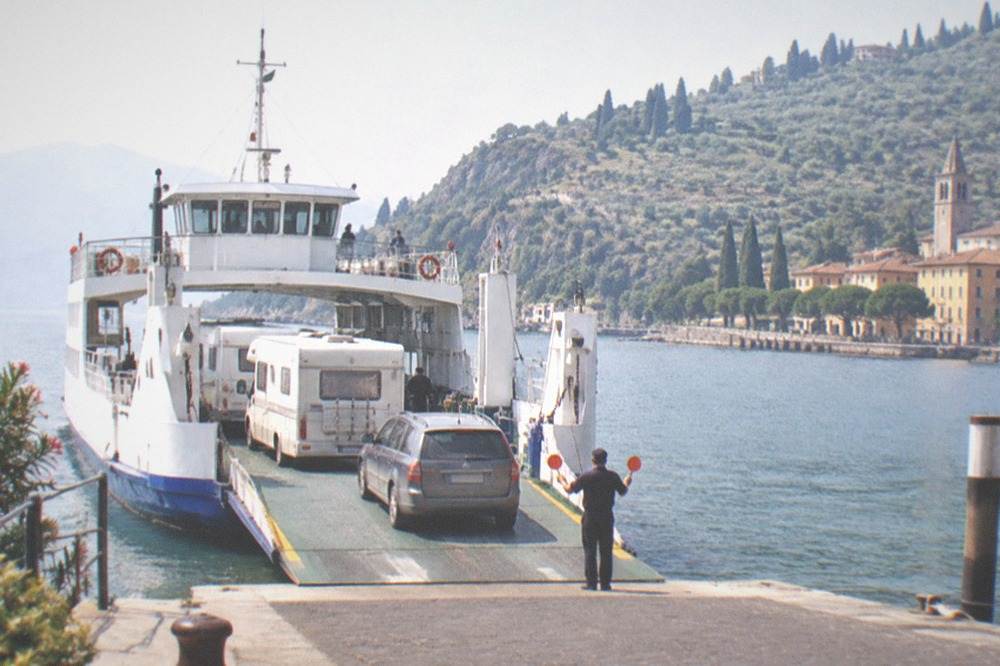
The Maderno to Torri crossing exists because the lake pinches to a few kilometres at that latitude, and driving around the northern tip would take the best part of two hours. The tariff is separate from the passenger network and came into force on 1 April 2026. One current restriction matters for planners: from 3 September 2026, buses and trucks are not carried on the Maderno to Torri routes, a notice the operator published with the timetable. The crossing time itself is not stated on the fare sheet, so check the timetable grid rather than any secondhand figure.
| Vehicle or passenger | One-way fare, driver included |
|---|---|
| Adult passenger | EUR 7.50 |
| Child 4 to 11 | EUR 3.80 |
| Group passenger (15 or more) | EUR 6.00 |
| Bicycle | EUR 9.20 |
| Motorbike up to 250 cc | EUR 9.80 |
| Motorbike over 250 cc | EUR 12.30 |
| Car up to 3.50 m | EUR 12.30 |
| Larger cars and campers | See the car ferry tariff sheet |
Returns are double the one-way fare, and disabled passengers pay 3.80 euro. For cyclists the ferry is a genuine tool rather than a curiosity: the lake's cycle infrastructure is uneven, and the Maderno crossing plus the passenger network let you skip the sections that are still road-only. Bicycles travel on the passenger network too, though the operator has published restrictions on bicycle and scooter transport at the Sirmione landing during the summer timetable, worth checking if your loop starts or ends there.
When Does The Timetable Change Through The Year?
The Lake Garda ferry runs two published timetables in 2026: one from 1 April to 15 May, and the full summer timetable from 16 May to 4 October. After 4 October the autumn and winter service drops to the main lines with reduced frequency, and the summer sheet's dense cross-lake links disappear until spring.
The summer window is the one most visitors experience, and it is also when the network is at its most useful: maximum frequency on the southern basin, the Malcesine to Limone shuttle running up to 16 crossings a day each way, and the fast services on the long runs. The structure of the post-October service, which routes survive and which go, is not fully published in the operator's current sheets, so the honest advice is to check the timetables page for your specific date rather than assume. What the season structure does tell you is that a winter trip can still use the ferry, just with fewer legs per day, and the Lake Garda in winter guide plans around exactly that constraint.
Ticketing has one modern shortcut worth knowing. The operator's NaviTap contactless system lets you buy a daily ticket directly on board with a Visa, Mastercard or digital wallet, with no fees, and one card can cover up to five tickets on a single tap. For a family boarding at a pier with a queue at the office, that is the fastest way onto the boat.
Shoulder-season days are the sweet spot for ferry-based exploring. June and September carry the full summer timetable without the peak crowding, and one recent traveller report from a car-free week in Malcesine noted no trouble boarding boats in June, with the warning that queues grow much later in the summer. An August Saturday, especially around the Ferragosto holiday, is the one combination to treat with respect.
Ferry Or Boat Tour For Your Day?
Take the ferry if your goal is moving between towns cheaply on a fixed timetable: it wins on price, with singles from 3.50 euro and a 39.50 euro day pass. Take a boat tour if the boat itself is the activity: a guide, a swim stop, lunch or an aperitivo are things the public network does not offer, and tour prices start at 13.77 dollars per person.
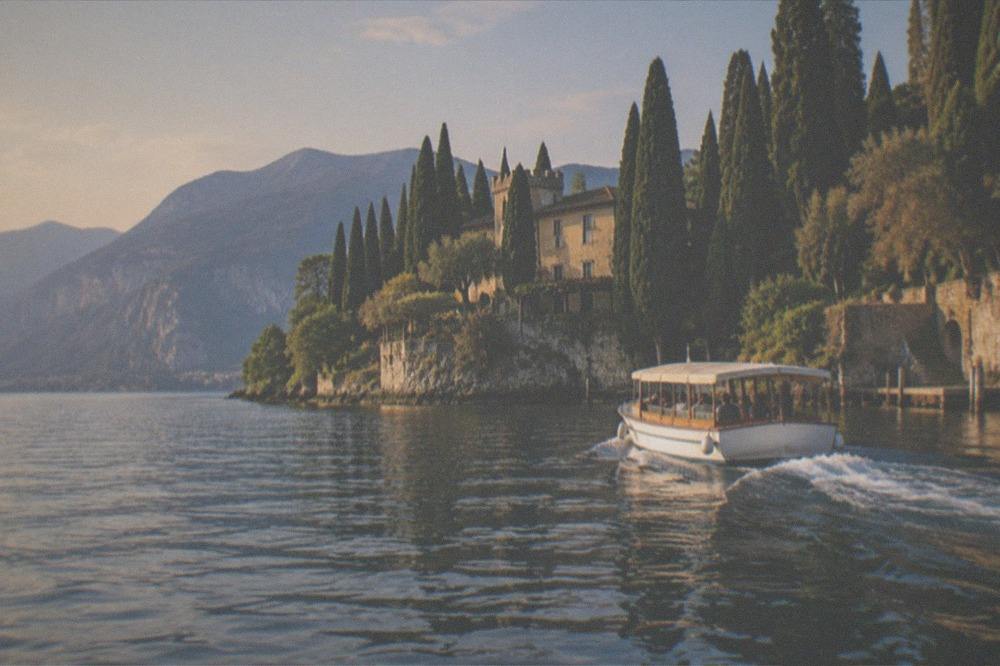
The two systems are complements, not competitors. A workable hybrid day uses the ferry for the long legs and a short tour for the sightseeing: ride the ordinary boat from Bardolino or Garda toward Sirmione, then take the 25-minute peninsula loop, which rates 4.7 from 3,495 reviews and costs from $13.77 per person, to see the Grotte di Catullo shoreline and the castle from the water. The guided cruise from Garda and Bardolino to Sirmione, 4 hours at from $63.12 per person with a 4.3 rating from 185 reviews, is effectively a tour-shaped version of that ferry leg with commentary attached.
The comparison deserves its own page, and the ferry versus boat tour guide runs the numbers leg by leg. The short version: for a couple doing one round trip, the ferry costs a fraction of any tour; for a family wanting the lake explained, a guided cruise earns its price. The Garda to Sirmione boat question is the single most common routing query, and the answer covers both the public crossing and the tour alternatives.
One full-day format splits the difference entirely. The bus and public boat tour from Garda, 10 hours with a guide at from $86.07 per person, rated 4.5 from 193 reviews, uses the public network but wraps it in commentary and a planned route, which suits travellers who want the ferry experience without doing the timetable homework.
Common Questions About The Lake Garda Ferry
How much is a one-way ticket on the Lake Garda ferry?
One-way adult fares run by section from 1.50 euro for an urban hop to 17.50 euro for the longest crossings. Sirmione to Desenzano costs 3.50 euro, Peschiera to Sirmione 6.00 euro, and Sirmione to Riva 16.00 euro, per the 2026 tariff sheet.
Do I need to book the Lake Garda ferry in advance?
No. Ordinary services are turn-up-and-go and places are limited only by each vessel's maximum capacity. Buying before boarding avoids the 1.00 euro on-board surcharge and the ticket-office queue, but no reservation system applies to ordinary passenger sailings.
What is the Lake Garda ferry timetable for 2026?
Two timetables are published: 1 April to 15 May 2026, then the full summer timetable from 16 May to 4 October 2026. After 4 October the service reduces to the main lines for autumn and winter, and your specific date should be checked on the operator's timetables page.
Is there a car ferry on Lake Garda?
Yes, one: the Maderno to Torri del Benaco crossing. Adults pay 7.50 euro and vehicles from 9.20 euro for a bicycle to 25.00 euro for a camper, driver included. From 3 September 2026 buses and trucks are not carried on this route.
Are Lake Garda ferry day passes worth it?
At 39.50 euro for the whole lake, a pass beats singles once you ride roughly three long crossings in a day. Zonal passes at 23.50 euro and 27.00 euro cover ordinary routes only, and fast services require a supplement unless you hold the whole-lake pass.
Can children travel free on the Lake Garda ferry?
Children under 4 travel free on ordinary services provided they do not occupy a seat and are accompanied by an adult, with a maximum of three children per adult. Children aged 4 to 11 pay reduced fares on every section.