Grotte Di Catullo By Boat: The Roman Villa From The Water And From Inside
The Grotte di Catullo is the largest Roman domestic building in northern Italy, and every boat that circles the Sirmione peninsula passes directly beneath its terraces. Seeing it from the water and walking inside are two different experiences, at two different prices.
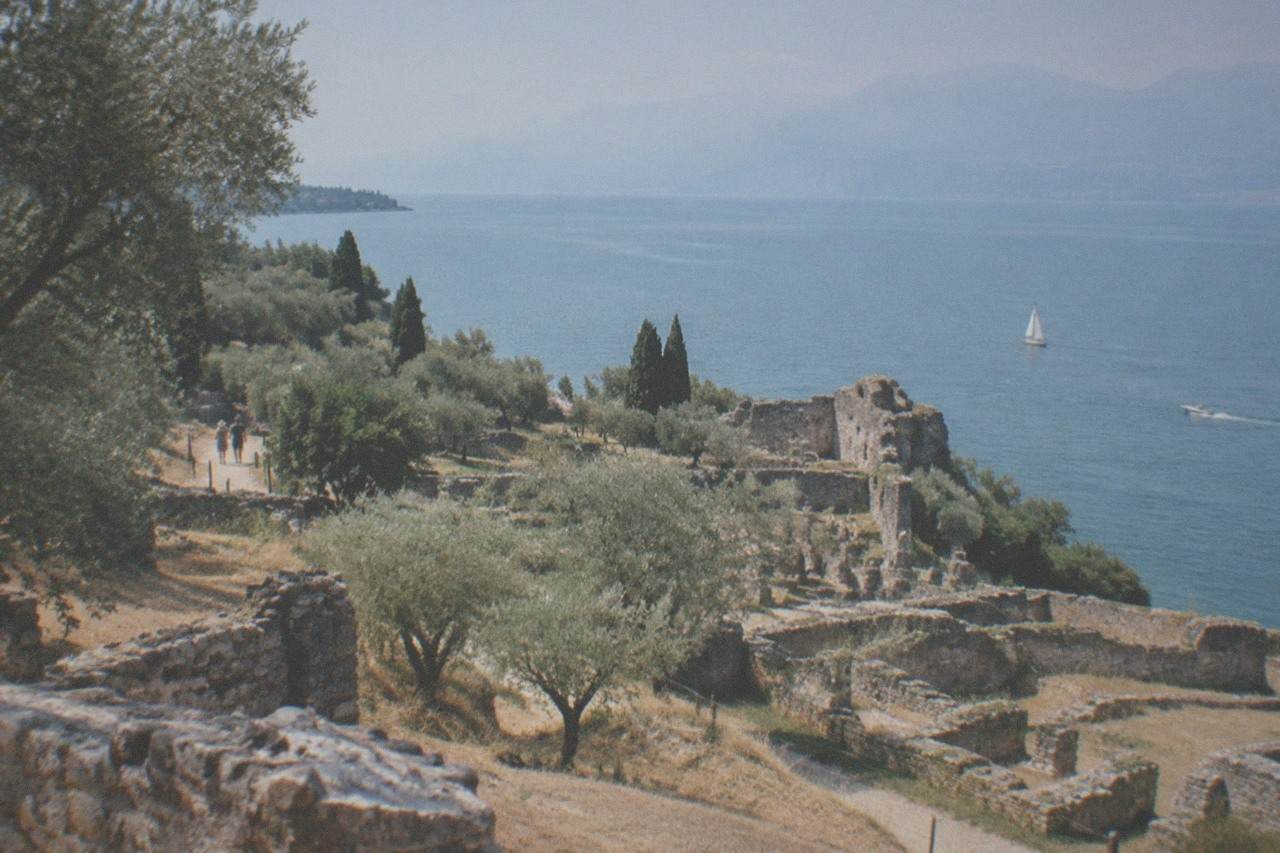
Short answer
The Grotte di Catullo costs 10 euro to enter and is open Tuesday to Saturday 8.30 to 19.30, Sunday from 10.00, Monday mornings only. A 25-minute peninsula boat cruise passes the villa from about $13.77 per person, and the shortest walk from the Sirmione landing is about 1.4 km, roughly 19 minutes.
The Grotte di Catullo sits on the tip of the Sirmione peninsula, and it is the single sight the whole southern boat circuit of Lake Garda exists to show. Every skipper leaving Sirmione's small harbour points the bow at it within the first five minutes. From the water it reads as a wall of pale terraces stacked above an olive grove, with the lake on three sides. From inside it is an archaeological site with a ticket office, a museum and a view most visitors remember longer than the ruins themselves. This guide covers both ways of seeing it, what each costs, and how to fit them into one day.
What Are The Grotte Di Catullo?
The Grotte di Catullo is the ruin of a large Roman villa built in the 1st century BC on the tip of the Sirmione peninsula, and it is the biggest Roman domestic building known in northern Italy. Despite the name, there are no caves: "grotte" comes from the collapsed, grotto-like appearance the ruins had when they were overgrown. The site is run by the national museum service and can be visited on foot only.
The name is the first thing that confuses visitors, so it is worth settling. The villa belonged to the Valerii family, and the poet Catullus almost certainly had a family house somewhere on this peninsula, which is why his name attached itself to the ruin. What stands today is a vast rectangular complex, roughly 167 metres long, built on four terraces cut into the headland. When it was abandoned, the walls collapsed inward and vegetation buried them, and for centuries locals saw only dark hollows in the hillside, grotte in Italian. The excavation in the nineteenth century kept the name.
The site is now part of the Direzione regionale Musei nazionali Lombardia, the national museum network, and it shares a ticket system with two other Roman and medieval sites on the lake. The on-site archaeological museum holds the finds from the excavation, including mosaics and fresco fragments, and the terrace at the top of the villa gives one of the widest views over the southern basin of Lake Garda. For the broader question of whether the ruins repay the ticket price, the companion piece are the Grotte di Catullo worth visiting goes into the trade-offs in detail, including what people who expected a castle tend to say afterwards.
One practical point that shapes every visit: the villa is at the far end of the peninsula, roughly two kilometres from the historic centre of Sirmione as the road runs, and there is no vehicle access along the olive-lined lane that leads to it. You arrive on foot, by the small road train that shuttles from the centre, or by boat, and the boat is the only option that shows you the villa from the water before you ever see a ticket.
Can You See The Ruins From A Boat?
Yes, and from the water the villa is the main event: every peninsula cruise from Sirmione harbour passes under the terraces of the Grotte di Catullo, and the shortest loop, the 25-minute cruise, does it for from $13.77 per person with a 4.7 rating across 3,495 reviews. The boat gives you the mass and setting of the ruin, not the interior, so it works as either a preview or a substitute for the walk.
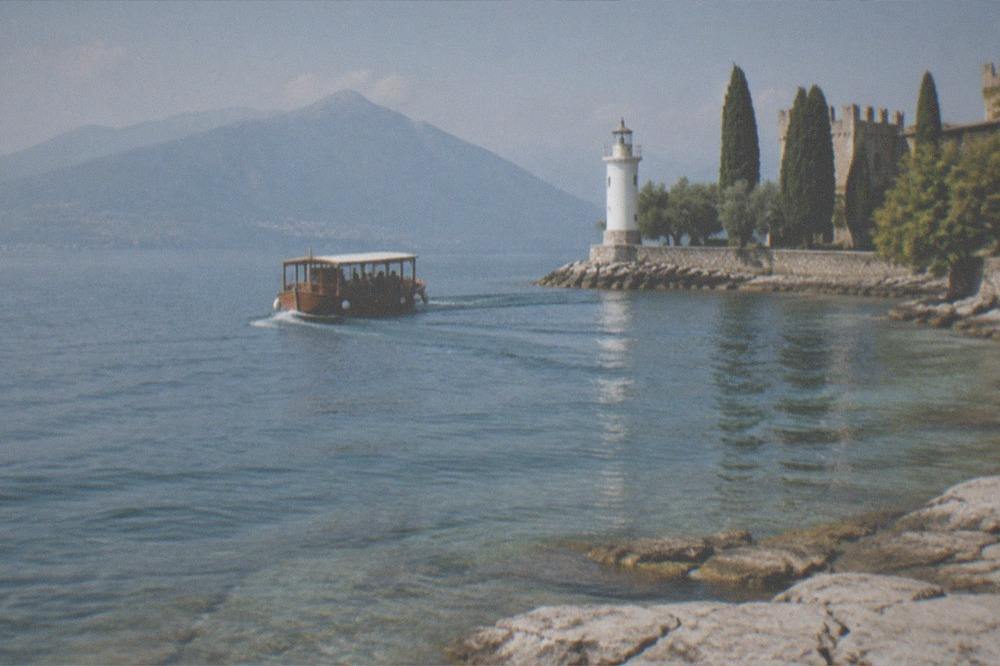
The classic Sirmione boat experience is the short loop around the peninsula, and it is built around the villa. The 25-minute cruise from Sirmione, rated 4.7 from 3,495 reviews and priced from $13.77 per person, leaves from the harbour in the historic centre and circles the whole headland: past the thermal spring that bubbles up close to the shore, under the cliffs and olive terraces of the villa, around the far tip with the lighthouse, and back past the moat of the Castello Scaligero. A longer 30-minute guided version, from $16.07 per person with a 4.4 rating from 78 reviews, adds a commentary on what you are looking at.
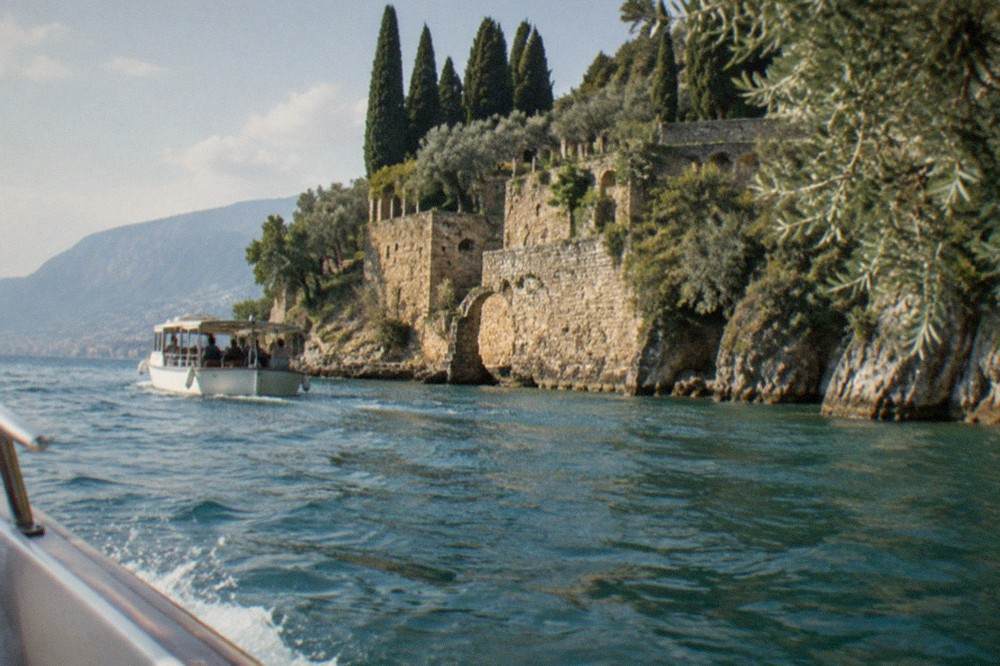
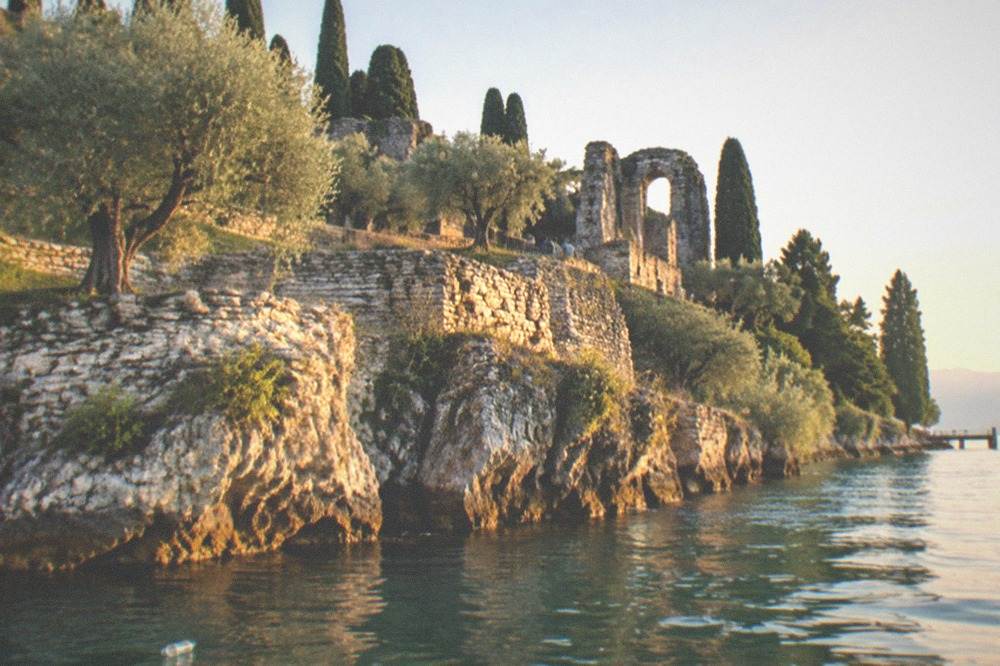
What the boat shows you that the footpath cannot is scale. From the water you see the villa as a single cliff-face of Roman masonry, four terraces high, sitting above a slope of centuries-old olive trees with the lake on three sides. The ruins are genuinely dramatic from below in a way they are not from the entrance gate, where the site opens out into lawns and low walls. Skippers usually slow down along this stretch, and the thermal spring just before it, the Boiola, is visible as a patch of disturbed water when conditions are calm.
The choice between the loop and the landing matters here. The short cruises do not stop at the villa; they pass it. If you want both the water view and the interior, you either take a cruise and then walk out, or you book one of the combined products that does the boat loop and the villa walk in a single outing. The full menu of options, from the 25-minute loop to private charters, is laid out in the Sirmione boat tour guide, and the wider question of which departure town suits you is covered in boat trips from Sirmione.
A private version of the same loop exists for visitors who want the boat to themselves: the 25-minute private peninsula tour is priced from $152.20 for the whole boat, up to five people, rated 4.7 from 81 reviews. For a couple or a family it changes the arithmetic, because the per-head cost of a private loop can land close to the shared ticket once the boat is full, and you choose the departure time.
What Does It Cost To Go Inside?
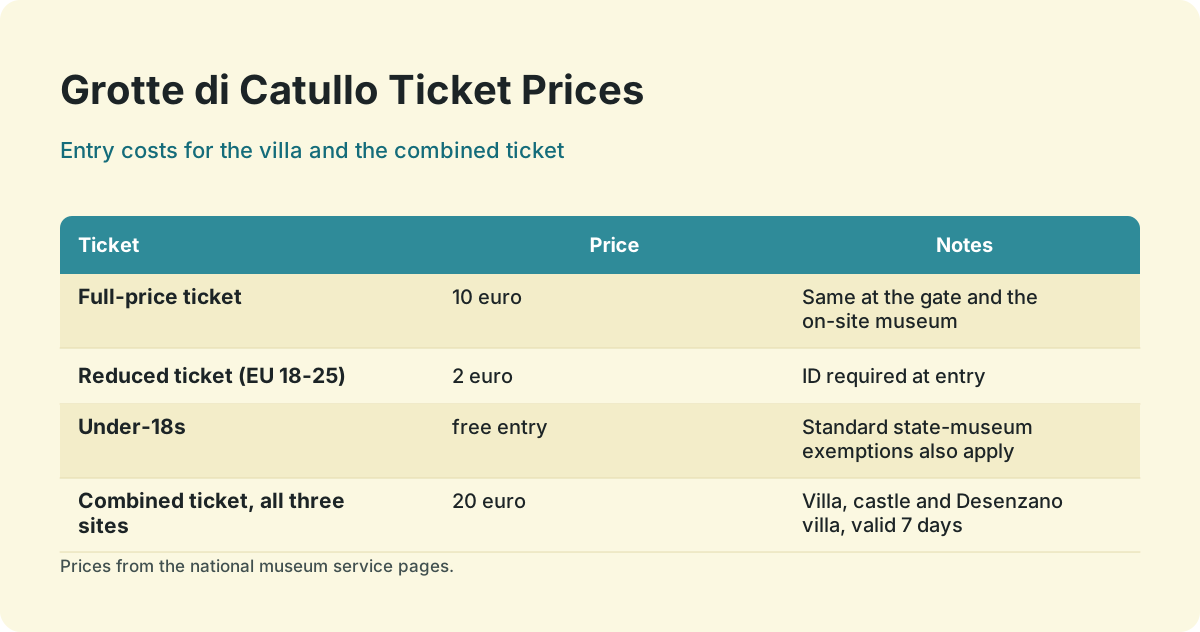
The Grotte di Catullo charges a full-price ticket of 10 euro, with a reduced 2 euro ticket for EU citizens aged 18 to 25, and free entry for under-18s and the standard Italian state-museum exemptions. The combined ticket covering the villa, the Castello Scaligero and the Roman villa of Desenzano is 20 euro and stays valid for seven days.
The single ticket is set by the national museum service and is the same at the gate and at the on-site museum. The published hours and prices come from the museum service's own pages, which list the full tariff and the combined options: the villa is open Tuesday to Saturday from 8.30 to 19.30, Sunday from 10.00 to 19.30, and Monday only from 9.00 to 13.00, with last entry 40 minutes before closing in every case. The official museum page carries the current figures and any closure days, and it is the page to check before travelling in the shoulder season.
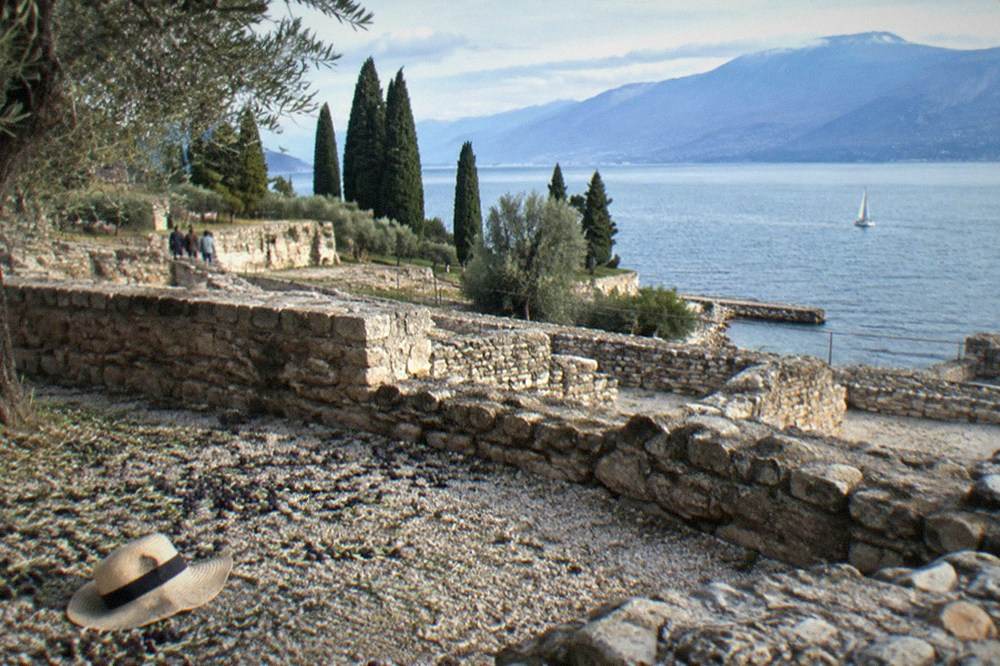
The combined ticket is the number most visitors should hold in their heads. For 20 euro you get the Grotte di Catullo, the Castello Scaligero in Sirmione's centre, and the Villa Romana in Desenzano, all within seven days. Two single tickets alone, the villa and the castle, already cost 20 euro, so the Desenzano villa is effectively included at no extra charge. The castle's own museum page confirms the same combined tariff and the castle's separate hours, which differ from the villa's: the castle is closed on Mondays entirely.
| Site | Full ticket | Reduced (EU 18-25) | Hours | Monday |
|---|---|---|---|---|
| Grotte di Catullo, Sirmione | 10.00 euro | 2.00 euro | Tue-Sat 8.30-19.30, Sun 10.00-19.30 | 9.00-13.00 only |
| Castello Scaligero, Sirmione | 10.00 euro | 2.00 euro | Tue-Sun 8.30-19.15 | Closed |
| Villa Romana, Desenzano | Included in combined ticket | Combined only | Check site page before visiting | Varies |
| Combined ticket, all three | 20.00 euro | 2.00 euro per site where eligible | Valid 7 days | Depends on each site |
One warning about the reduced tariff: it applies only to citizens of the European Union between 18 and 25, and you will be asked for ID. Under-18s enter free, as do the standard exemption categories listed on the national museums' concession pages. If your visit falls on the first Sunday of the month, it is worth checking whether the state-museum free-entry scheme applies, but do not assume it: the scheme's dates and participation are not something to plan around without confirming on the museum page.
When Is It Open?
The villa opens Tuesday to Saturday from 8.30 to 19.30 and Sunday from 10.00 to 19.30, with Monday reduced to a single morning window from 9.00 to 13.00. Last entry is 40 minutes before closing every day, and the site closes on 1 January and 25 December. The on-site museum keeps the same hours as the ruins.
The Monday window is the trap in this timetable. Most of Sirmione's other sights, including the castle, shut completely on Mondays, and visitors who save the villa for a Monday often discover the hard way that the afternoon is closed. The morning window also ends early, at 13.00, with the last entry at 12.20, so a Monday visit needs to be the first thing you do that day, not an afterthought after the boat loop.
The long summer evening hours, to 19.30, are generous by Italian museum standards and they reward the late-afternoon visitor twice over: the heat has dropped, the tour groups have thinned, and the low sun across the water makes the terraces photograph far better than they do at midday. In practice the last two hours of the day are the calmest the site gets in July and August. The museum hall at the entrance is air-conditioned and holds the mosaics and painted plaster from the excavation, so it works as a cool-down stop in the middle of a hot visit rather than a separate trip.
Seasonality matters less here than at private attractions, because the site is a state museum with a fixed annual timetable rather than a summer-only operation, but the surrounding peninsula is not. The boat cruises that pass the villa run on their own seasonal schedules, and the Sirmione access rules change with the calendar too: the summer ZTL regulation of the historic centre runs from 23 March to 13 October, and on 31 designated days in 2026 the centre is fully pedestrianised between 14.00 and 19.00, which affects how you reach the harbour in the afternoon. The details of those days, and the parking options outside the restricted zone, are set out in the Sirmione guide.
How Do You Walk There From The Pier?
From the Sirmione ferry and tour-boat landing to the villa entrance is about 1.4 km, roughly a 19-minute walk along a flat, partly tree-shaded lane, with the Castello Scaligero at the start and olive groves along the way. From the historic centre the walk is longer, around 2 km, and a shuttle road-train runs from near the castle to the site entrance in high season.
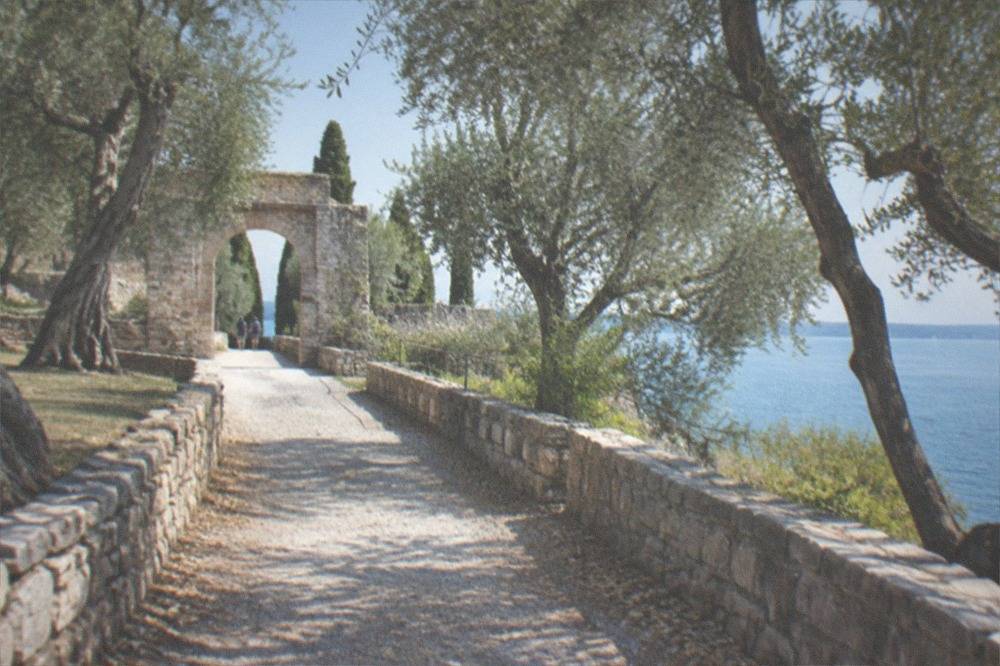
The walking route is simple and hard to get wrong. From the landing at the foot of the old town you pass the castle moat, continue along the peninsula road through the historic centre, and then follow the olive-lined lane that runs the length of the headland to the villa gates. The lane is flat, closed to through traffic, and for most of its length it runs between olive groves and low walls, with the lake visible through the trees on both sides. In July and August the shade is patchy, so water and a hat are worth carrying. More of these guides are collected on Lake Garda Boat Tours.
| Route | Distance | Time on foot | Notes |
|---|---|---|---|
| Ferry landing to villa entrance | About 1.4 km | About 19 minutes | Flat, mostly shaded lane, no through traffic |
| Historic centre to villa entrance | About 2 km | About 25-30 minutes | Adds the walk through the old town |
| Shuttle road-train, centre to site | Short hop | A few minutes | Seasonal service, ticket bought on board |
| Boat cruise past the villa | Loop, no stop | 25-45 minutes depending on cruise | Water view only, no landing at the site |
Two practical notes shape the walk. First, the road-train shuttle exists precisely because the lane is long and hot in summer, and families with small children or anyone with limited mobility should treat it as the default rather than the fallback. Second, the walk back is the same lane, so a round trip on foot from the centre is 4 km in total, which is more than most visitors expect in the heat. The ferry option is the elegant escape: the public boat from Sirmione to Desenzano takes about 20 to 25 minutes and costs 3.50 euro one way, so some visitors walk out to the villa, see it, and return by water to a different town for lunch.
The castle you pass at the start of the walk is worth a pause in itself, and the question of whether its towers and darsena repay their own 10 euro ticket is covered in is the Castello Scaligero worth visiting. If you are combining both in one day, the geometry favours the castle first: it sits at the neck of the peninsula, on the way to everything, while the villa is the far end.
Is The Combined Ticket Worth It?
The combined ticket is worth it for almost anyone visiting Sirmione with more than half a day, because 20 euro buys the villa, the castle and the Desenzano Roman villa over seven days, and the villa and castle alone cost 20 euro as single tickets. It only fails to pay off if you will see just one site, or if your party qualifies for the 2 euro reduced rate, where single tickets are cheaper.
The arithmetic is blunt. Two single full-price tickets, villa plus castle, cost exactly the same 20 euro as the combined ticket that adds a third site. So the combined ticket is free value unless you were only ever going to see one of the three. The seven-day validity means it survives a change of plans, a rainy day, or a decision to move your base to Desenzano, and the Villa Romana there, with its exceptional floor mosaics, is a short walk from Desenzano station and ferry landing.
The reduced-rate case is the exception. If everyone in your party is an EU citizen aged 18 to 25, each single ticket is 2 euro, so three sites cost 6 euro per person against 20 euro for the combined ticket. The combined ticket makes no sense there. For families, the under-18s are free at all three sites, so the combined ticket price applies only to the adults.
| Visitor situation | Best ticket | Why |
|---|---|---|
| One day in Sirmione, seeing villa and castle | Combined, 20 euro | Same cost as two singles, Desenzano villa included free |
| Staying several days on the lake | Combined, 20 euro | Seven-day validity covers a relaxed pace |
| EU visitors aged 18-25 | Single tickets, 2 euro each | Reduced singles beat the combined price |
| Only time for the boat loop, no ruins | No ticket needed | The cruise shows the villa from the water |
| Half a day, villa only | Single, 10 euro | No saving from combining on one site |
There is also a boat product that builds the ticket logic into the day: the historic castle cruise with wine tasting, a 4-hour shared tour from Sirmione rated 4.6 from 300 reviews and priced from $114.76 per person, which pairs the peninsula by water with a local wine tasting ashore. It does not include the villa's entrance ticket, but it covers the same stretch of shore and adds the tasting, which suits visitors whose interest in Roman masonry is lighter than their interest in the view.
Water First Or Ruins First?
Do the water first. A morning or early-afternoon cruise shows you the villa's setting and scale while your legs are fresh, and you then walk out to the site knowing what the terraces look like from below, which makes the interior easier to read. Reversing the order means walking 2 km in the heat before you have seen anything, then discovering the boat too late in the day.
The sequence matters more than it sounds. The villa's interior is a set of low walls, foundations and terrace platforms, and without the water view first it can read as a field of stones. Seen after the cruise, the same walls make sense: you know where the cliff edge is, how the four terraces stack, and why the Romans built the great cisterns where they did. The cruise is also the faster of the two experiences, 25 minutes against a half-day for the walk and the site, so it fits neatly at the start of a day without committing the whole schedule.
The one-booking version of this sequence is the combined boat and walking tour: 3.5 hours from Sirmione, from $109.02 per person, rated 4.8 from 47 reviews, covering the peninsula by boat, the villa on foot and the old town in between, with the guide handling the timings. It is the product that answers this question by construction, and for visitors without a car, without much time, or without the wish to plan three separate tickets, it removes every decision the sequence involves.
If you would rather assemble the day yourself, the shape that works is: cruise at opening time or early afternoon, walk out along the lane while the day is still bright, an hour or more inside the site, then either the walk back or the ferry to Desenzano for the evening. In high summer, flip it: the site's late hours to 19.30 mean you can cruise in the morning, spend the hot midday in the old town or on a beach, and walk to the villa after 17.00 when the terraces are in the best light and the crowds have gone.
Which Boat Trip Shows The Villa Best?
The 25-minute peninsula cruise is the purest water view of the villa, from $13.77 per person, while the 3.5-hour combined boat and walking tour, from $109.02 and rated 4.8 from 47 reviews, is the most complete single product because it adds the interior and the old town. For a longer shared loop with commentary, the 1-hour tour from Peschiera or the 4-hour guided cruise both pass the villa too.
The short loop wins on focus. Nothing else happens on the 25-minute cruise except the peninsula, so the villa gets the boat's full attention, and the skipper's slow pass beneath the terraces is the moment the whole product is built around. The 30-minute guided version adds a commentary, and for a few dollars more it tells you what you are looking at, which for a Roman site most people know only by name is worth having.
The combined tour wins on completeness, and its 4.8 rating from 47 reviews reflects a small pool, so treat the number as a signal rather than a statistic. What it guarantees is the thing most visitors fail to arrange: the villa seen from both sides in one outing, with the walking, the timings and the entrance handled. The 1-hour-30-minute village highlights walking and boat combo, from $67.71 per person and rated 4.6 from 70 reviews, is the middle option, pairing a shorter loop with the old town but leaving the villa to your own feet.
| Boat trip | Duration | From (per person) | Rating and reviews | How it covers the villa |
|---|---|---|---|---|
| 25-Minute Peninsula Cruise | 25 minutes | $13.77 | 4.7 from 3,495 reviews | Passes the terraces, no stop |
| 30-Minute Guided Peninsula Tour | 30 minutes | $16.07 | 4.4 from 78 reviews | Passes with commentary, no stop |
| Walking and Boat Combo | 1h 30m | $67.71 | 4.6 from 70 reviews | Short loop plus old town walk |
| Boat, Grotte di Catullo and Walking Tour | 3.5 hours | $109.02 | 4.8 from 47 reviews | Loop, villa interior and old town |
| Castle Cruise with Wine Tasting | 4 hours | $114.76 | 4.6 from 300 reviews | Passes the villa, adds tasting ashore |
Departure town changes the picture as well. The cruises from Peschiera and Desenzano approach the peninsula from open water, so the villa appears as the climax of a longer crossing rather than the first thing you see, and the 3.5-hour east-coast cruise from Peschiera, from $68.86 per person and rated 4.7 from 423 reviews, reaches the peninsula with time to circle it properly. For visitors based in the south of the lake without a car, that approach can beat starting in Sirmione itself, where summer crowds around the harbour are at their thickest in the middle of the day.
The peninsula has one more claim on the water, beyond the Romans: it and the cliffs around it have appeared on film, and the story of which productions shot on and around the lake is covered in what was filmed at Lake Garda. It is a reminder that the view from the boat, the villa stacked over the water with the mountains behind, is not just an archaeological setting but one of the most photographed stretches of shore in northern Italy.
The choice, in the end, is simple. If the villa is the reason you are in Sirmione and you have one day, take the combined tour and let someone else sequence it. If you are passing through, or the ruins are a maybe, take the 25-minute loop: it is the cheapest complete view of the Grotte di Catullo that exists, and it may be all you need.
Common Questions About The Grotte Di Catullo By Boat
Can you see the Grotte di Catullo from a boat?
Yes. Every peninsula cruise from Sirmione harbour passes directly beneath the villa's terraces, including the 25-minute loop from $13.77 per person. The cruises pass the site rather than landing at it, so you see the villa's scale and setting from the water but not the interior.
How much does it cost to go inside the Grotte di Catullo?
The full ticket is 10 euro, with a 2 euro reduced rate for EU citizens aged 18 to 25 and free entry for under-18s. The combined ticket with the Castello Scaligero and the Desenzano Roman villa is 20 euro and is valid for seven days.
When is the Grotte di Catullo open?
Tuesday to Saturday from 8.30 to 19.30, Sunday from 10.00 to 19.30, and Monday mornings only, 9.00 to 13.00. Last entry is 40 minutes before closing, and the site closes on 1 January and 25 December.
How far is the walk from the Sirmione pier to the villa?
About 1.4 km, roughly 19 minutes on foot from the ferry and tour-boat landing, along a flat lane closed to through traffic. From the historic centre the walk is around 2 km, and a shuttle road-train runs from near the castle to the site entrance in high season.
Is the combined ticket worth it?
For most visitors, yes. The villa and the castle alone cost 20 euro as two single tickets, the same price as the combined ticket that also includes the Desenzano Roman villa, so the third site is effectively free. Only visitors who will see one site, or who qualify for the 2 euro reduced rate, do better with singles.
Which boat trip shows the villa best?
The 25-minute peninsula cruise gives the purest water view, from $13.77 per person. The 3.5-hour combined boat, villa and walking tour, from $109.02 per person, is the most complete option because it adds the interior and the old town in one booking.