What Not To Miss On Lake Garda?
The sights you should not miss on Lake Garda, with the time each one takes, what it costs and the boat that gets you there, from the Sirmione peninsula to Monte Baldo.
What Not To Miss On Lake Garda?
If you have one day, do the Sirmione peninsula from the water, walk the Grotte di Catullo above it, and take a guided boat to Isola del Garda. With two days, add the Monte Baldo cable car from Malcesine and the cliff coast between Limone and Riva. Everything headline-worthy on this lake is either on the shore or best reached across it.
Lake Garda runs about 54 kilometres from its southern shore at Peschiera del Garda to Riva del Garda in the north, and the lake itself is the road that ties the highlights together. The regional ferry network calls at 28 landing stages, so almost every sight on a must-see list can be reached without a car, and several of the best ones can only properly be seen from a boat. That single fact shapes this whole list: of the six experiences below, four are either on the water or end at a pier.
Preliminary figures from the three lakeside regions put Lake Garda at almost 28 million visitor nights in 2025, and the crowds concentrate in a handful of places, Sirmione above all. The trick is not to avoid the famous sights, most of them are famous for good reasons, but to time them and to reach them the way the lake intended. A wider things to do around the lake round-up covers the full menu; this page is the shortlist, with a time cost and a price attached to every entry so you can build a realistic plan. That is the same principle behind Lake Garda Boat Tours as a site: the itinerary and the crossing are the same decision.
| Highlight | Time needed | Cost | How you reach it |
|---|---|---|---|
| Sirmione peninsula by boat | 25 minutes | From $13.77 per person | Short cruise from Sirmione harbour |
| Grotte di Catullo ruins | 1 to 2 hours | EUR 10 full entry | Walk from the Sirmione landing |
| Isola del Garda | About half a day | EUR 46 adult from Sirmione | Guided boat, booking obligatory |
| Monte Baldo cable car | Half a day | EUR 30 return, EUR 28 online | Cable car from Malcesine |
| Limone to Riva cliff coast | 2 hours | From $45.90 per person | Sailboat cruise from Malcesine |
| Gardaland | Full day | Online 1-day tickets from EUR 44 | Shuttle from Peschiera station |
The two prices in dollars come from live tour listings; the euro figures are gate and ferry tariffs charged by the sights themselves. Costs shift through the season, so treat every number here as a floor rather than a promise. What does not shift is the geography, and geography is what the rest of this page walks through.
What Is The One Thing To Do From The Water?
The Sirmione peninsula loop. A 25-minute boat circuit from Sirmione's harbour passes under the Scaligero castle, along the cliff base below the Grotte di Catullo and past the thermal spring at the tip, and it costs from $13.77 per person. No path on land shows you the peninsula this way, and no other single trip packs this much into under half an hour.
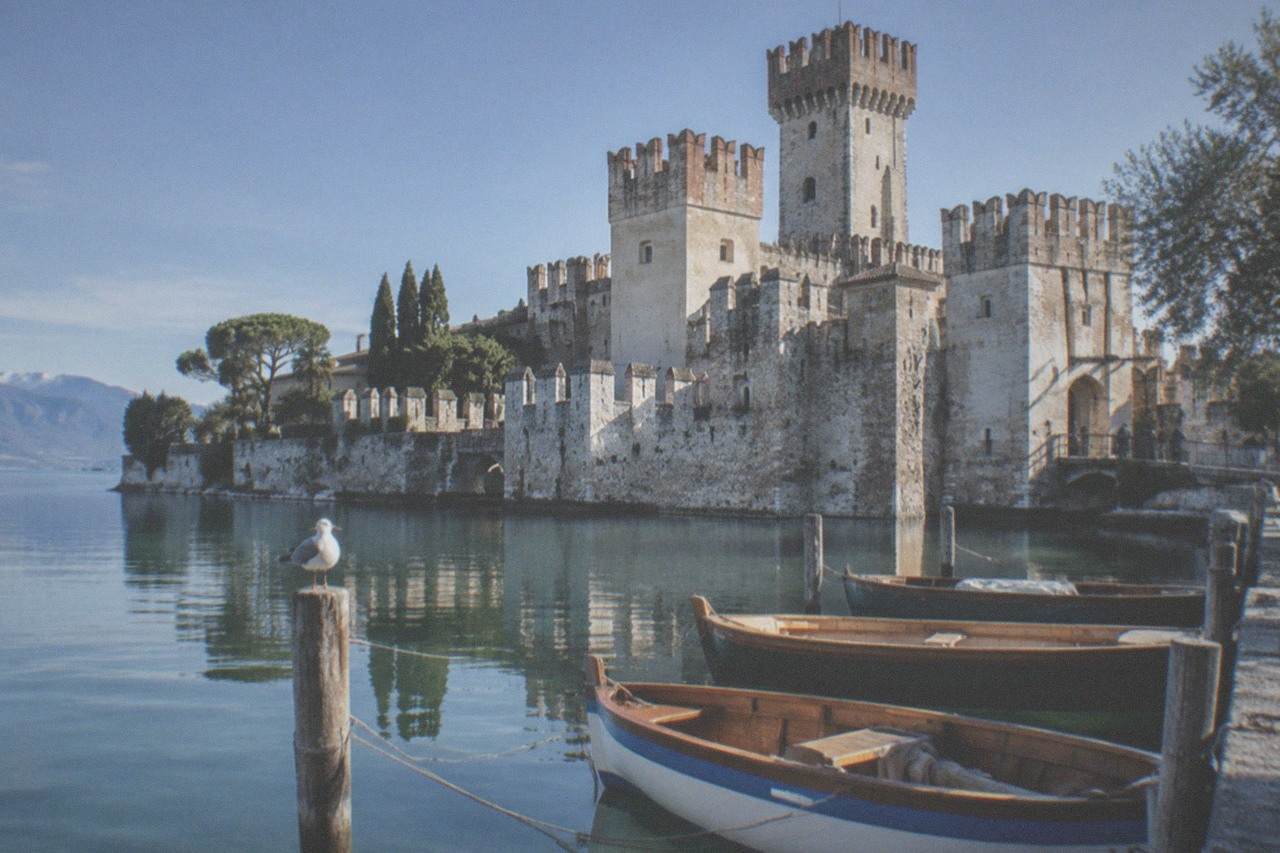
The peninsula is a narrow spit of rock that pushes about two and a half kilometres into the lake from the southern shore, crowned by a Roman villa complex and lined with cypress, olive trees and grand hotel facades. From the water you get all of it in sequence: the moated Scaligero castle first, its dock cut straight into the rock, then the cliffs below the ruins, where the boatmen point out the cave openings that gave the Grotte di Catullo their name. At the tip, the water above the Boiola thermal spring shimmers noticeably warmer than the lake around it, a strange sight in itself.
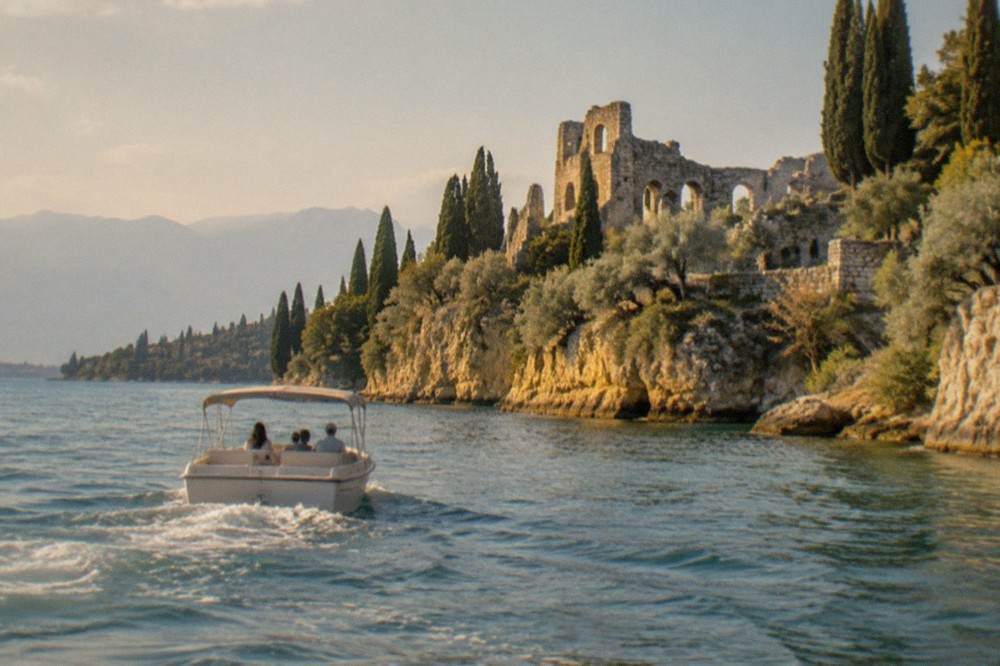
The basic loop is run by several operators from the harbour beside the castle. The 25-minute peninsula cruise, rated 4.7 from 3,495 reviews, is the cheapest headline experience on the lake and carries free cancellation on the listing. It is a shared boat, so you queue, board, sit back and let the skipper do the talking; the commentary is delivered in several languages over the engine noise.
If you want the same waterline with more substance attached, the four-hour historic castle cruise with wine tasting covers the peninsula by boat, gives you time ashore in the old town and finishes with a tasting of local wines, from $114.76 per person. It is rated 4.6 from 300 reviews, and the wine stop turns a photo run into something closer to a proper afternoon. For a middle option there is also a combined walking and boat tour of the village, one and a half hours, rated 4.6 from 70 reviews, from $67.71 per person.
The short loop deserves its own line in your plan even if you book the longer cruise, because the two experiences differ more than their route suggests. The 25-minute version is an orientation: it shows you the shape of the peninsula, the scale of the cliffs and the position of the castle in about the time it takes to drink a coffee. Many travellers do it first and then decide, with the map fresh in their heads, whether to commit the rest of their day to the town behind the harbour.
One practical note belongs here because it shapes every Sirmione plan: the old town is a limited-traffic zone, and in 2026 the council has scheduled 31 full pedestrianisation days in the peak season, closing the centre to private vehicles between 14:00 and 19:00 on those dates. Arriving by boat sidesteps the whole problem. The ferry from Desenzano costs EUR 3.50 each way and takes about 20 to 25 minutes, and it lands you a two-minute walk from the castle bridge.
Which Town Should You Not Skip?
Sirmione. The peninsula town holds the Scaligero castle, the Grotte di Catullo ruins and the thermal spring, all within a walk of the boat landing, and the ferry from Desenzano costs EUR 3.50 each way and takes about 20 to 25 minutes. Malcesine is the strong runner-up for the north, but Sirmione concentrates more per square metre than anywhere else on the lake.
The case for Sirmione is density. Castle, Roman ruins, a spa town's worth of thermal history and one of the most photographed harbours in northern Italy all sit on one walkable spit, and the boat circuit ties the whole outline together in less than half an hour. The council's own 2026 flow-management plan, 31 pedestrian days, expanded parking and a free shuttle running to 21:00, is a frank admission of how many people have reached the same conclusion. A dedicated guide to Sirmione covers the town street by street.
The honest counterargument is the crowds that density creates. Booking data reported by local media puts the average Lake Garda stay at just 2.7 nights, which means a large share of visitors are day-trippers funnelling into exactly this one town. Sirmione in the early morning and Sirmione at midday are two different places. The first ferries from Desenzano leave around 8:00, and the first hour after arrival is the calmest the peninsula gets.
Malcesine is the alternative if your base is in the north. It has its own Scaligero castle standing directly over the water, a compact medieval centre, and the cable car to Monte Baldo leaving from a five-minute walk above the harbour. What it lacks is the single dramatic landform that makes Sirmione unmistakable. If you can only pick one town and you are staying south of Bardolino, pick Sirmione; if you are sleeping in Riva or Torbole, Malcesine is the sensible choice and the castle there is the better photography subject in the late afternoon.
Which Sight Is Worth A Ticket?
Isola del Garda. The private island in the middle of the western basin opens only for guided visits, from 29 March to October with no tours on Saturdays or Mondays, and booking is obligatory. An adult ticket from Sirmione costs EUR 46 and includes the boat, the guide and a welcome drink, and the visit runs about two and a quarter hours on the island.
The island belongs to a single family, the Borghese Cavazza, and their villa, terraced gardens and private harbour cannot be visited independently: the family's own site states plainly that a visit without the guided tour is not possible. That exclusivity is the product. The crossing itself takes 15 to 40 minutes each way depending on the departure port, and the tour includes a welcome drink and an olive oil tasting on the terrace. Departures run from fifteen ports around the lake, with Sirmione served on Tuesdays and Thursdays at 11:00. The full schedule and booking rules are on how to visit Isola del Garda, and the island's own guided visits page is where reservations are made.
If the island's fixed days do not fit your itinerary, the runner-up for a paid ticket is the Grotte di Catullo, and it costs far less. The Roman villa complex at Sirmione's tip is the largest private Roman dwelling in northern Italy, and the regional museums service charges EUR 10 for a full ticket, EUR 2 for EU visitors aged 18 to 25, with a combined EUR 20 ticket that also covers the Castello Scaligero in Sirmione and the Roman villa in Desenzano over seven days. It opens from 8:30 on most days and stays open until 19:30 in the main season, closing only on 1 January and 25 December, according to the museum service's own page.
The Scaligero castle deserves its EUR 10 too, especially for the mastio climb and the dock visit, though note the dock is only viewable on guided tours and the castle closes on Mondays. A sensible order if you are walking rather than cruising: castle first, since it is at the harbour end, then the long flat walk out to the villa, then the boat loop from the jetty below the ruins on the way back.
What Is Worth The Climb?
Monte Baldo. The cable car from Malcesine runs from 4 April to 1 November and puts you on a ridge with the whole lake laid out below. A full adult return costs EUR 30, or EUR 28 bought online, and children under 1.20 metres travel free. Allow half a day, and take an early cabin: the last ascent is at 18:00, at 16:00 from 5 October.
The Funivia Malcesine climbs from the edge of Malcesine's old town to the Tratto Spino station on the Baldo ridge, and on a clear day the view takes in the full 54-kilometre length of the lake, the Dolomites to the north and the plain to the south. The operator's timetable and fare page carries the season dates, the first ascent at 8:15 and the fare scale, with a junior return at EUR 18 for children born in 2012 or later. The ridge itself is gentle walking country, meadows in spring and early summer, so the climb the title refers to is done entirely by cable.
The reason to go early is not just the light. Clouds often build over the ridge by early afternoon in the warmer months, and the difference between a morning view and a two-o'clock view can be the difference between a postcard and a white sheet. Pair the descent with a late lunch in Malcesine and the half-day is complete; the practical details, bike transport rules and family pricing are collected in the Monte Baldo cable car guide.
The other climb worth the effort costs nothing at all. The Rocca di Manerba, on the western shore, rises inside a nature reserve that the local museum describes as 114 hectares of woods, meadows, olive groves and vineyards with a further 84.8 hectares of protected lake water below it. The path to the top is short and the reward is a cliff-edge view over the lower basin that most visitors, who never cross to the Brescia shore, never see at all.
What Do Most Visitors Miss?
The western shore. Most day traffic funnels between Peschiera, Sirmione and the east-bank towns, which leaves the cliff coast between Limone sul Garda and Riva del Garda, the Manerba nature reserve and the Varone waterfall comparatively quiet. The cliff coast in particular is barely touched by the road, and the only relaxed way to see it is from a boat.
The Gardesana road on the north-west shore is one of the great drives of northern Italy, but it is a drive: cliff above, guardrail below, and nowhere to stop and stare. From the water the same coast reverses its character. The rock rises straight out of deep water, the lemon terraces of Limone stack up the slope in white frames, and the whole stretch between Limone and Riva reads as one continuous wall of mountain. A provincial rule bans motorboats from the Trentino waters at the far northern end, around Riva and Torbole, which keeps that corner unusually quiet for a shoreline this dramatic.
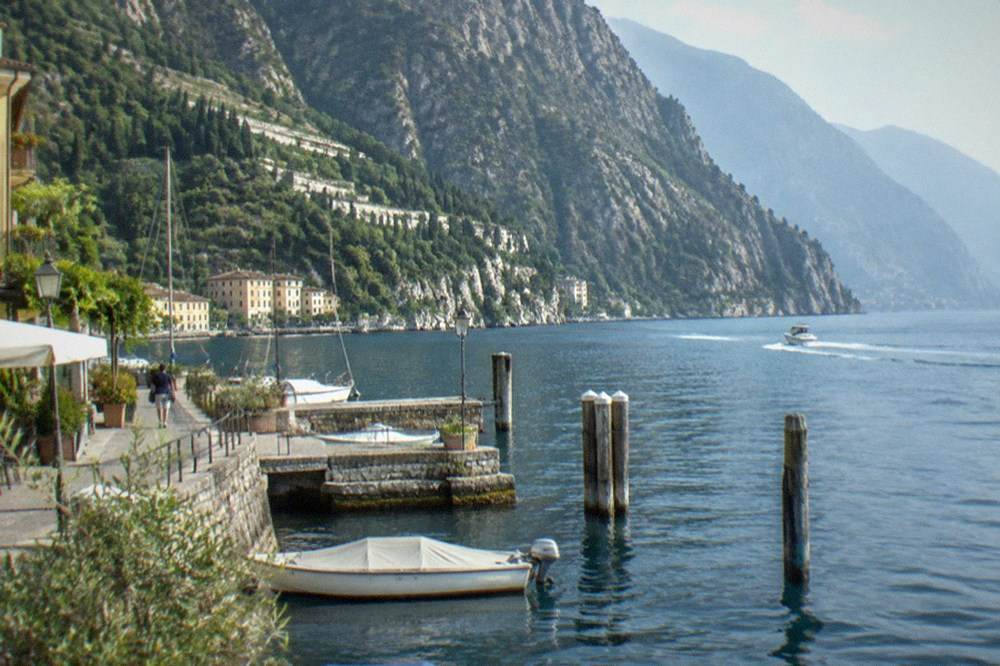
Two boats cover it well. From Malcesine, directly across the water, the two-hour panoramic cruise on a historic sailboat runs from $45.90 per person and is rated 4.2 from 335 reviews; from Limone itself, an eight-hour tour serving the northern hotels runs from $78.04 per person, rated 4.5 from a small pool of 9 reviews, so read the recent feedback rather than trusting the number alone. The sailboat option matters here more than anywhere else on the lake, because the wind pattern is the point: the morning Pelèr blows from the north until around noon, then the Ora fills in from the south through the afternoon, and a sailing skipper works with both.
Inland from Riva, the Cascate del Varone is the other overlooked entry. The waterfall drops through a limestone gorge that the site's own price and hours page describes as reachable in a visit of about 20 minutes, though most people linger longer; entry is EUR 7, family tickets run EUR 19 to EUR 28, and it opens every day except 25 December, with summer hours from 9:00 to 19:00. A free picnic area beside the entrance seats up to 150 people. It is the sort of sight that a lake-focused itinerary skips entirely, and it is 15 minutes from Riva's harbour.
The Manerba reserve and the Sigurtà garden park fill out the quiet list. Sigurtà, near Peschiera on the Verona side, is open 7 March to 15 November with spring flower displays that draw coach parties in April but thin out later in the season, and Manerba's cliff paths are, in high summer, among the few lakeside walks that never feel full. Neither needs a boat, which is precisely why the boat crowd misses them.
How Do You Fit It All In?
Two days, built around the boat timetables. Day one stays south: the Sirmione peninsula loop, the Grotte di Catullo on foot, and the 11:00 guided crossing to Isola del Garda on a Tuesday or Thursday. Day two goes north by ferry to Malcesine, up Monte Baldo by cable car, and back past the west-coast cliffs on a two-hour sailboat cruise.
The constraint most first-time visitors underestimate is not distance but scheduling. The Isola del Garda tour only runs on certain days from each port, the cable car closes for its annual maintenance in November, and the summer ferry timetable, the dense one, runs 16 May to 4 October with thinner service either side. Booking data puts the average stay at 2.7 nights, which is enough for exactly this two-day spine plus arrival and departure halves. If you are weighing a longer base, the question of how many days are enough deserves its own read.
| Day | Morning | Afternoon | Evening |
|---|---|---|---|
| Day 1 | Ferry to Sirmione, 25-minute peninsula loop, walk to Grotte di Catullo | 11:00 guided boat to Isola del Garda, Tuesday or Thursday | Aperitivo on the Desenzano lungolago |
| Day 2 | Ferry north to Malcesine, cable car up Monte Baldo | Two-hour sailboat cruise of the west-coast cliffs | Dinner in Malcesine, last ferry checked |
A whole-lake free-circulation ferry day pass costs EUR 39.50 adult if you would rather hop than book, and the single Sirmione to Riva fare is EUR 16. The pass covers the fast services too, which is the difference that makes the day-two sprint north actually work. Check the last southbound sailing before you commit to dinner; the summer timetable thins sharply in the evening.
If the two-day spine is tight, the cut to make is Gardaland. The park opens its 2026 season on 28 March, online dated one-day tickets start at EUR 44, and a free shuttle connects Peschiera station, but no boat lands at the park itself: the nearest landings are Peschiera del Garda and Lazise. It is a full day spent off the lake, and this particular list is about the lake.
Which Boat Trip Covers The Highlights?
A cruise that links Sirmione's castle with a stop on land. The four-hour castle cruise with wine tasting from Sirmione, rated 4.6 from 300 reviews, does the peninsula waterline, gives you time ashore and ends with local wine, from $114.76 per person. If you only want the waterline, the east-coast cruise from Peschiera covers more shoreline for less.
The castle cruise is the single booking that touches the most boxes on this list: castle, peninsula cliffs, the old town on foot and a taste of the local Lugana-adjacent wineries, all inside four hours and all from one departure point. It suits the traveller who wants one decision rather than five, and the free-cancellation terms on the listing mean a forecast of thunderstorms does not trap you into a wet afternoon.
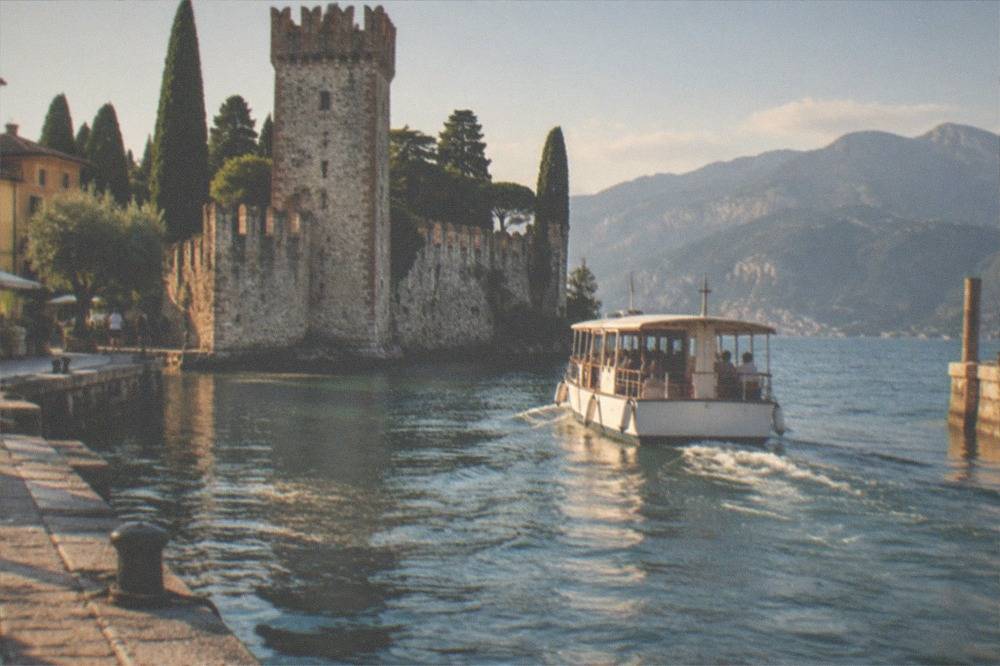
The alternative, if your base is Peschiera rather than Sirmione, is the three-and-a-half-hour east-coast cruise to Sirmione, from $68.86 per person and rated 4.7 from 423 reviews. It spends its time on the water rather than ashore, running the whole Veronese shoreline down to the peninsula and back, and it pairs naturally with a self-guided wander in Sirmione at the turnaround. From the town of Garda on the east bank, a four-hour guided cruise to Sirmione, rated 4.3 from 185 reviews and from $63.12 per person, does a similar job.
For the north, the choice is between the sailboats from Malcesine already covered above and the slower public ferry, which reaches the same cliffs for EUR 16 from Sirmione but gives you no time among them. And for the island, a private option exists: a two-hour private boat tour to Isola del Garda from Garda town with wine and food tasting, from $229.52 per person for a group of up to five, rated 4.9 from 19 reviews, a small pool so judge it on the itinerary rather than the score. Whichever you pick, book the day before rather than the morning of, and check the wind forecast: the northern waters are the one part of the lake where weather genuinely rewrites plans.
Common Questions About Lake Garda
What Not To Miss On Lake Garda?
The Sirmione peninsula by boat, the Grotte di Catullo ruins, a guided visit to Isola del Garda, the Monte Baldo cable car from Malcesine and the cliff coast between Limone and Riva. Each is either on the water or reached best across it, so build the plan around the ferry timetables and one booked cruise.
What Is The One Thing To Do From The Water?
The 25-minute Sirmione peninsula loop, from $13.77 per person. It passes the Scaligero castle, the cliffs below the Roman ruins and the thermal spring at the tip, and it is the cheapest way to see the lake's most famous landform.
Which Sight Is Worth A Ticket?
Isola del Garda. The private island admits visitors only on guided tours, with an adult ticket from Sirmione at EUR 46 including boat, guide and welcome drink. The Grotte di Catullo at EUR 10 is the budget alternative.
What Is Worth The Climb?
Monte Baldo, by cable car from Malcesine. An adult return is EUR 30, EUR 28 online, the season runs 4 April to 1 November, and the ridge gives the single best view of the lake's full 54-kilometre length.
How Do You Fit It All In?
Two days: day one around Sirmione with the peninsula loop and the 11:00 island crossing on a Tuesday or Thursday, day two north by ferry to Malcesine for the cable car and a two-hour sailboat cruise of the west-coast cliffs.
Which Boat Trip Covers The Highlights?
The four-hour castle cruise with wine tasting from Sirmione, from $114.76 per person, rated 4.6 from 300 reviews. It combines the peninsula waterline, time ashore and a wine tasting in a single departure.