Is Sirmione Worth Visiting?
An honest verdict on Sirmione: what the castle and Roman villa cost, how bad the crowds get, when the old town closes to cars, and which boat trip is the smart way to see the peninsula.
Is Sirmione Worth Visiting?
Yes, Sirmione is worth visiting, and the reasons are concrete rather than sentimental. The town holds a Scaliger castle standing directly in the water, the Grotte di Catullo, which is the largest Roman domestic villa in northern Italy, and a sulphur spring at the peninsula tip. The trade-off is crowds: the old town is a restricted traffic zone all summer, and the streets fill by late morning.
The honest framing is this: Sirmione delivers more sightseeing per square metre than any other town on the lake, and it charges for that in bodies rather than euros. Entrance to the castle is 10 euro, the Roman villa is 10 euro, and a combined ticket covers both plus the villa in Desenzano for 20 euro over seven days. Nothing about the town itself is gated or ticketed. You can walk the entire peninsula, swim off the rocks and watch the ferries thread the narrows without spending a cent beyond the boat or parking that gets you there.
The question is rarely whether Sirmione is impressive. It is. The question is whether you can enjoy it at the hour you arrive, and that depends on timing more than on anything else. This article works through the sights, the real costs, the crowd pattern across a summer day, and the boat trips that let you see the peninsula even when the streets are solid with people. If you are weighing the whole lake rather than one town, the broader case is covered in our Sirmione town guide, which goes deeper on the history and the layout.
What Is There To See?
Three things anchor a Sirmione visit: Castello Scaligero, the lakeside fortress you walk through to enter the old town; the Grotte di Catullo, the Roman villa and museum on the headland; and the views from the peninsula tip, where the Boiola spring bubbles up offshore. The castle ticket includes the keep, and the villa site needs a good hour on foot. Together they fill half a day.
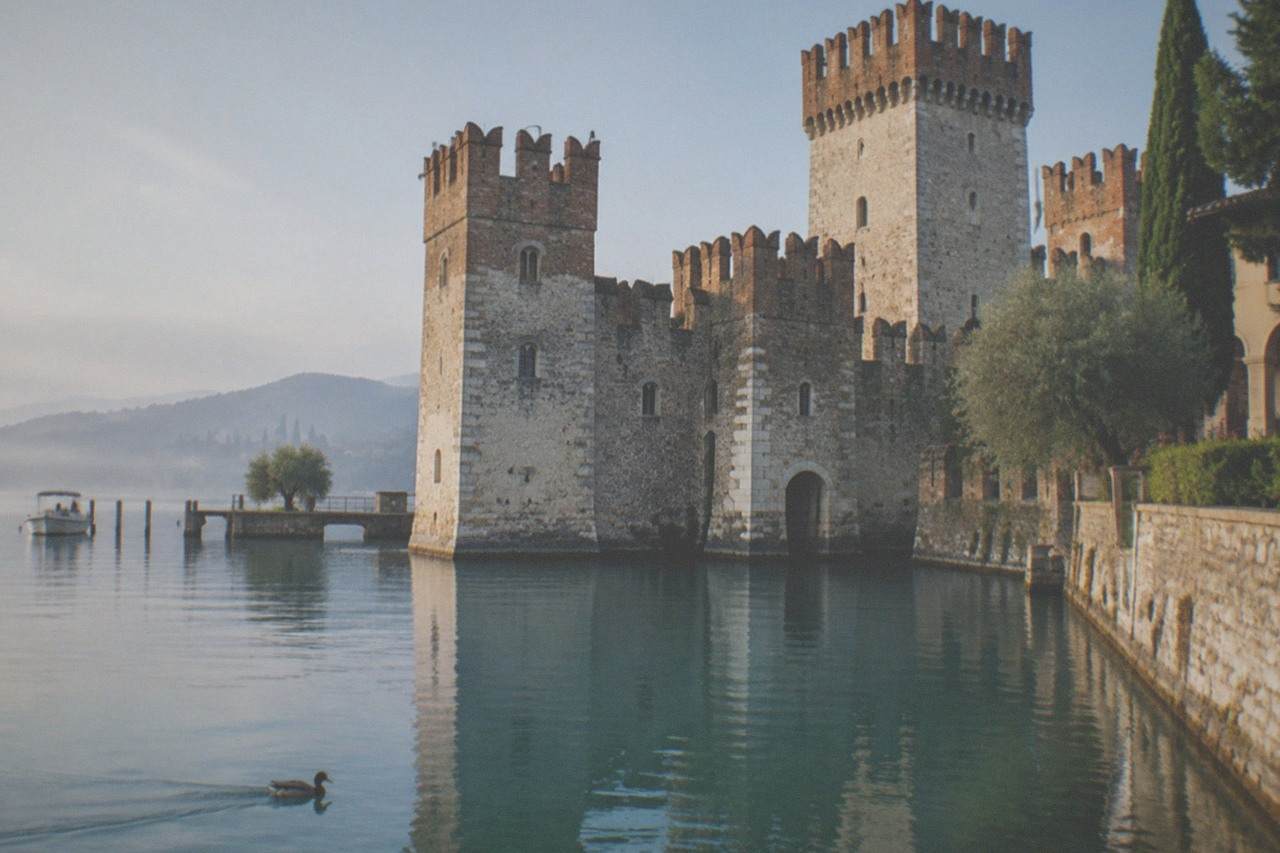
Castello Scaligero is the first thing everyone photographs, and it deserves it. The fortress sits on a small harbour, the darsena, with the keep rising above the drawbridge that carries you into the old town. The ticket includes free exploration of the keep; the darsena, the internal harbour with its wooden fortifications, is viewable only on guided tours, so check at the desk if that matters to you. The castle is closed on Mondays and open Tuesday to Sunday from 8.30 to 19.15, with the ticket office shutting at 18.30. Full price is 10 euro, with a 2 euro reduced rate for EU visitors aged 18 to 25. If the keep alone is on your list, our piece on whether Castello Scaligero is worth visiting breaks down what the ticket buys.
The Grotte di Catullo is the other heavyweight. Despite the name, there are no caves: the site is the remains of a vast Roman villa, the largest domestic Roman building in northern Italy, spread across terraces at the peninsula tip with the archaeological museum beside it. It is open Tuesday to Saturday from 8.30 to 19.30, Sunday from 10.00 to 19.30, and Monday morning only, 9.00 to 13.00, with last entry 40 minutes before closing. Full price is 10 euro, the same 2 euro reduction applies, and the combined seven-day ticket covering the villa, the castle and the Roman villa in Desenzano costs 20 euro. The walk from the old town is about 20 minutes along the peninsula road, or you can approach the whole site from the water, which is the angle most visitors never see.
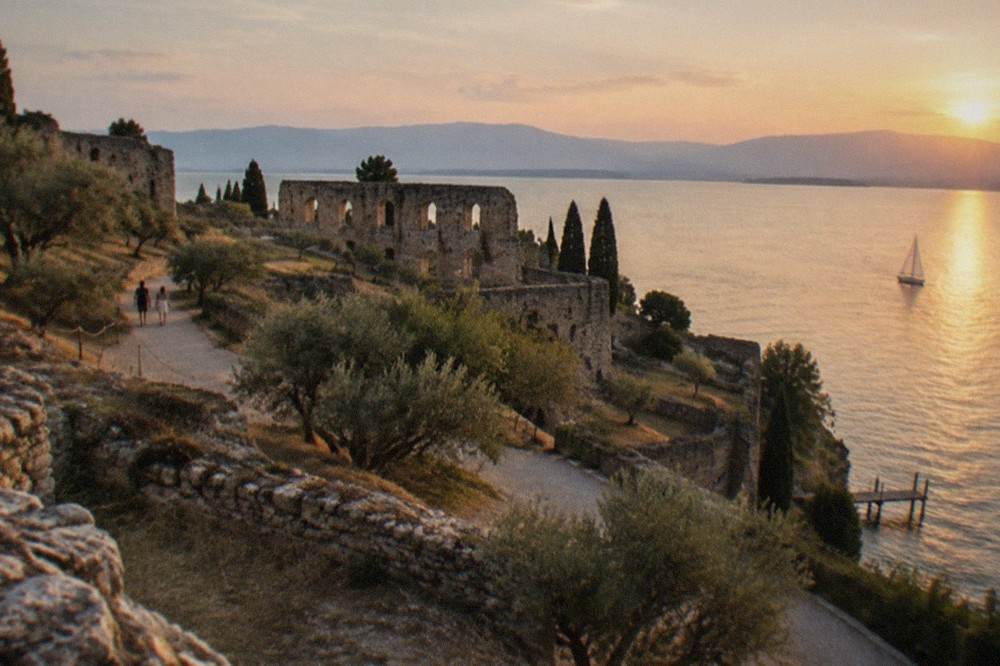
Beyond the two ticketed sights, the peninsula itself is the attraction. The lungolago path runs the full length of the headland, the rocks at Punta Grotte are a swimming spot, and the Boiola spring, the underwater sulphur source that made Sirmione a spa town in Roman times and again in the nineteenth century, is visible from the shore as a patch of disturbed water about 30 metres out. You cannot bathe in it and there is no viewing structure; it is simply a fact of the place. If the villa is your main reason for coming, the detailed verdict lives in our article on whether the Grotte di Catullo are worth visiting.
| Sight | Price | Hours | Time needed |
|---|---|---|---|
| Castello Scaligero | 10 euro, reduced 2 euro | Tue to Sun 8.30 to 19.15, closed Mon | 45 to 60 minutes |
| Grotte di Catullo and museum | 10 euro, reduced 2 euro | Tue to Sat 8.30 to 19.30, Sun 10.00 to 19.30, Mon 9.00 to 13.00 | 60 to 90 minutes |
| Combined ticket, castle plus villa plus Desenzano villa | 20 euro, valid 7 days | Covers all three sites' hours | Half a day spread over days |
| Old town and peninsula walk | Free | Always open | 60 to 90 minutes |
| Boiola spring viewpoint | Free | Always visible from the path | 10 minutes |
How Busy Does It Get?
Very, on roughly 31 scheduled days a year and every weekend in high summer. Sirmione's old town is a restricted traffic zone under summer rules from 23 March to 13 October 2026, and on 31 published pedestrianisation days the historic centre closes to all private vehicles between 14:00 and 19:00. The town rejected a visitor cap, so the numbers are managed with street tutors and parking instead.
The 2026 pedestrianisation calendar is published and worth reading before you pick a date. The days are concentrated on spring holidays and summer weekends: in April, the 4th, 5th, 6th, 24th, 25th and 26th; in May, the 1st, 2nd, 3rd, 30th and 31st; then Sundays and Saturdays from June through September, including 15 and 16 August, the Ferragosto weekend. On those days the ZTL is closed to private vehicles both entering and leaving between 14:00 and 19:00, with exceptions only for emergency vehicles, hotel guests arriving for the first time with luggage, and the electric shuttle carts from the Grifo Parking. The official detail is on the Sirmione ZTL page.
The town administration considered a numerical visitor cap and rejected it as legally unworkable, so the practical reality is crowds managed by parking and pedestrian flow rather than turnstiles. What that means for you: on a pedestrianisation afternoon you will walk in a river of people from the castle to the villa path. It is not dangerous and it is not hostile, but it is slow, and with a pushchair or a heat-sensitive toddler it can tip past enjoyable. The mitigations are real, though. Resident parking near the castle has grown to 87 stalls on pedestrianisation days, and the free Grifo Parking shuttle runs until 21:00, so the system does move people.
The pattern holds even on ordinary weekdays in July and August. Day-trippers arrive from mid-morning, the queue for the castle drawbridge photo spot thickens by noon, and the narrow lanes between the port and the villa path are at their densest between 14:00 and 17:00. Early morning and evening are the exceptions: the town is quiet before 10:00, and after 19:00 the day-trippers drain away and the restaurants along the port take over. Anyone asking whether the wider lake rewards this kind of effort should also weigh the overall question of whether Lake Garda is worth visiting, because Sirmione is its busiest single answer.
What Do The Tickets Cost?
The sightseeing costs are fixed and modest: 10 euro for the castle, 10 euro for the Roman villa, 20 euro for the combined seven-day ticket covering both plus the Desenzano villa. Getting there is the variable. Parking runs 3 to 4 euro an hour in high season, the ferry from Desenzano is 3.50 euro each way, and the 25-minute boat loop around the peninsula starts at 13.77 dollars per person.
Break the day into sightseeing, transport and the boat, because each is priced differently. Sightseeing is the cheap part and the prices are official: the two 10-euro tickets and the 20-euro combination, with the 2 euro reduction for EU 18 to 25-year-olds at both sites. Children and over-65s from the EU enter free at the state sites under the standard Italian museum concessions. There is no Sirmione pass and no bundled town ticket, so the combined ticket is the only saving mechanism, and it only pays off if you will also visit the Villa Romana in Desenzano within seven days.
Transport is where the money goes. If you drive, the visitor car parks sit outside the restricted zone: Monte Baldo at 3.50 euro an hour or 28 euro for the day in high season, Piazzale Europa at 4 euro an hour, and the Tancredi and San Vito car parks at 3 euro an hour with an 8-hour cap. If you come by train, the ferry is the connector: Desenzano to Sirmione is fare section 1 at 3.50 euro one way, Peschiera to Sirmione is section 2 at 6.00 euro, and the crossing from Desenzano takes about 20 to 25 minutes on the summer timetable. Tickets bought on board carry a 1 euro surcharge per passenger, so buy at the landing. The full fare logic, including day passes at 39.50 euro for the whole lake, is in the official Navigazione Laghi tariff sheet.
The boat tour is the third line of the budget, and it is the one people underrate. The 25-minute peninsula cruise, the shared loop that passes the castle, the villa and the spring, starts at 13.77 dollars per person and is rated 4.7 from 3,495 reviews, which is one of the largest review pools of any boat product on the lake. The longer options scale up from there, and the guided walking-and-boat combinations reach 109.02 dollars for a 3.5-hour version that includes the villa site on foot. Set against 28 euro for a day of parking, the boat starts to look like the economical way to see the peninsula rather than the luxury add-on.
How Long Do You Need?
Half a day is the honest minimum, and a full day is better if you want the villa at a human pace. The castle takes an hour, the villa site with its museum takes 60 to 90 minutes, the peninsula walk adds another hour, and the boat loop adds 25 minutes plus boarding time. Doing all three in a rushed afternoon is possible but it is the recipe for the worst of Sirmione.
The compressed itinerary works like this: arrive by 9:00, do the castle before the drawbridge queue forms, walk or take the little train up the peninsula to the Grotte di Catullo for late morning, swim or rest at Punta Grotte, and take a boat loop in the early afternoon when the streets are at their fullest. That is a five to six hour day and it touches everything. The mistake people make is arriving at 11:00 by car, paying 28 euro to park, queuing 30 minutes for the castle, and then discovering the villa is a 20-minute walk away in the heat. At that point the day is a fight rather than a visit. The full index of guides sits on Lake Garda Boat Tours.
The relaxed version spreads the same content across a full day and adds the parts that make Sirmione distinctive. The spa tradition is one: the town's thermal water has been the reason people came here since the Romans, and the modern spa facilities sit at the peninsula tip near the villa, though their entry prices are on their own listings and not published in a form we can verify here. The other addition is Isola del Garda, the private island villa garden just off the western shore. The island's own guided visits run from late March to October, closed Saturdays and Mondays, and the Sirmione departure is at 11:00 on Tuesdays and Thursdays, priced at 46 euro from Sirmione in fare zone 2, booking compulsory. That is a half-day commitment by itself, and it pairs naturally with an overnight stay rather than a day trip.
Overnight changes the calculus completely. After 19:00 the day-trippers leave, the pedestrianisation rules expire for the evening, and the old town becomes the place the postcards promise. The average stay on the lake overall runs short, and Sirmione rewards the exception: a visitor who sleeps in town gets the quiet morning and the quiet evening, and only shares the streets with the crowd for the hours in between.
Is It Better From The Water?
For the castle and the peninsula profile, yes, unambiguously. The fortress is built to be seen from the harbour, the Roman villa terraces only make sense from offshore, and the Boiola spring is visible only from a boat. The 25-minute shared loop from 13.77 dollars covers all three; a private boat gives you the same route on your own schedule from 152.20 dollars for the boat.
The argument is partly architectural. Castello Scaligero was built with its feet in the water, and the darsena, the fortified inner harbour, is a feature of the lake rather than the land. From the shore you see the walls; from a boat you see the design. The Grotte di Catullo is the same story in reverse: the villa's terraces were laid out to face the water, and the long cliff face of the peninsula with the villa embedded in it is the view the Roman owners paid for. The Boiola spring, the patch of disturbed water off Punta Grotte, is invisible from the shore path and obvious from a boat passing close.
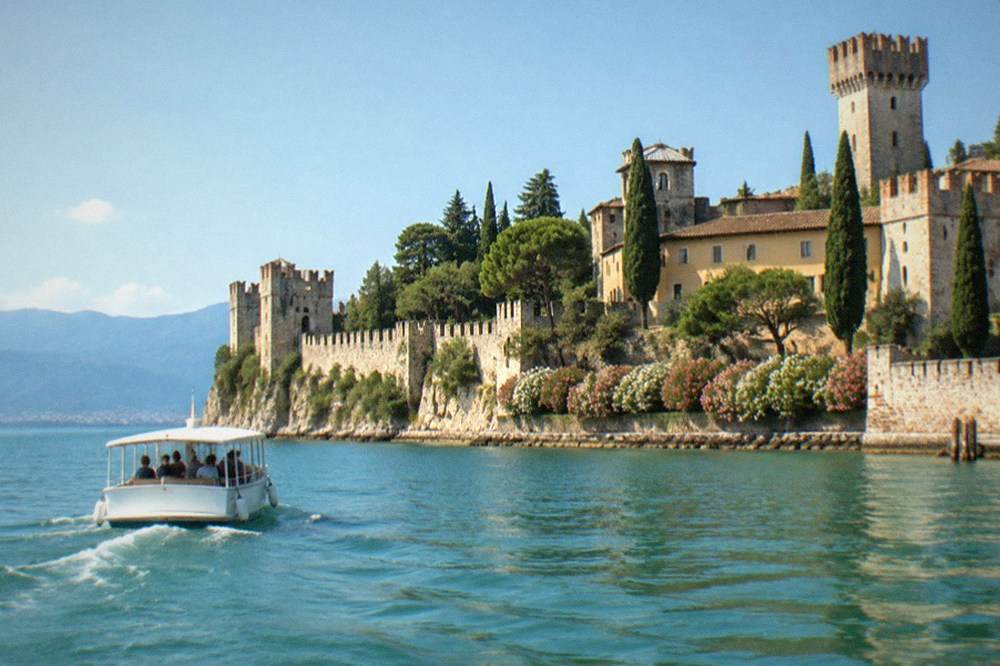
The shared 25-minute loop is the workhorse option. It runs from the port inside the old town, costs from 13.77 dollars per person, and holds a 4.7 rating from 3,495 reviews, the deepest review pool of any tour on this site. The route circles the full peninsula: out past the castle, along the villa cliffs, around the tip and the spring, and back. The listing carries free cancellation. If you want commentary rather than just the view, the 30-minute guided version from 16.07 dollars, rated 4.4 from 78 reviews, adds a guide's narration to the same loop. And if the walking is the problem rather than the crowd, the boat-and-villa combination tours handle the transport and the site in one ticket.
The private route is the upgrade for couples and small families. The 25-minute private peninsula tour is from 152.20 dollars for the whole boat, up to five people, rated 4.7 from 81 reviews: at five people that is roughly 30 dollars a head, which is competitive with the shared loop and you choose the departure time. The longer private options reach Isola del Garda, including the 1.5-hour private island tour from 509.27 for the boat with an aperitif, rated 4.9 from 413 reviews. The full spread of options, from the shared loop to the sunset cruises, is laid out in our Sirmione boat tour guide, and the wider choice of departure points around the lake is in the boat trips from Sirmione overview.
When Should You Arrive?
Before 10:00, or after 18:00, and by boat if you can. The streets are quiet before the day-trippers land, the pedestrianisation window does not start until 14:00, and the evening gives the town back to the people staying in it. Arriving by car between 11:00 and 14:00 on a summer weekend is the single worst combination Sirmione offers.
The day has a shape and it is predictable. The first ferries from Desenzano and Peschiera land in the morning, the car parks fill through the late morning, the pedestrianisation window runs 14:00 to 19:00 on the 31 scheduled days, and the whole thing reverses after dinner. Work with the shape rather than against it.
| Time band | What Sirmione is like | Best use of the hour |
|---|---|---|
| 08:00 to 10:00 | Quiet lanes, open castle, empty photo spots | Castle first, then coffee on the lungolago |
| 10:00 to 13:00 | Ferries and coaches arrive, queues build | Walk to the Grotte di Catullo before the heat |
| 13:00 to 15:00 | Peak density, pedestrianisation starts on scheduled days | Boat loop, spring viewpoint, long lunch |
| 15:00 to 18:00 | Heaviest foot traffic, slowest movement | Villa museum, spa, or leave the old town |
| 18:00 to 21:00 | Day-trippers drain out, streets reopen to residents | Aperitivo on the port, evening light on the walls |
| After 21:00 | Quiet, warm, the town at its best | Night walk to the peninsula tip |
The transport choice matters as much as the hour. The train-plus-ferry combination from Desenzano or Peschiera sidesteps the parking entirely: about 20 to 25 minutes on the water from Desenzano at 3.50 euro each way, and the landings sit a flat 15-minute walk from both stations. If you drive, aim for the Monte Baldo car park early, and note that on pedestrianisation days you will not move the car between 14:00 and 19:00, so park once and plan the afternoon around the boat rather than the car.
One scheduling note worth the effort: the Isola del Garda departures from Sirmione leave at 11:00 on Tuesdays and Thursdays, so if the island visit is part of your plan, those are the days the town visit and the island visit can be chained together. Booking is compulsory for the island and the visits are guided only.
Which Sirmione Boat Trip Should You Book?
Match the trip to your time and your crowd tolerance. The 25-minute shared loop from 13.77 dollars is the default answer and fits any schedule. The 30-minute guided version from 16.07 dollars adds commentary. The 3.5-hour boat, villa and walking combination from 109.02 dollars is the full experience for people who want the Grotte di Catullo properly explained rather than glimpsed.
The shared loop is the right call for most visitors because it solves the exact problem Sirmione creates. When the streets are full, the water is empty, and the loop shows you the three signature sights, castle, villa and spring, in 25 minutes without a queue anywhere. It is rated 4.7 from 3,495 reviews, departs from the port inside the old town, and carries free cancellation on the listing. For a family doing Sirmione in half a day, this is the tour that makes the itinerary work: castle in the morning, villa before lunch, loop while the afternoon crowd owns the streets.
The guided 30-minute version is the same loop with a guide aboard, from 16.07 dollars per person, rated 4.4 from 78 reviews. Choose it if the history is the point: the guide covers the Scaliger dynasty, the Roman villa and the spring in the time it takes to circle the headland. The review pool is much smaller, 78 against 3,495, so treat it as a format preference rather than a quality difference.
The full combination is the 3.5-hour tour that pairs the boat with the Grotte di Catullo and a walking tour of the old town, from 109.02 dollars per person, rated 4.8 from 47 reviews. It is the deepest experience of the three and the one that turns Sirmione from a photo stop into an explained place; the trade-off is that it commits your whole afternoon. With a review pool of 47 it is a well-rated specialist option rather than a proven crowd-pleaser, so it suits the visitor who already knows they want the archaeology.
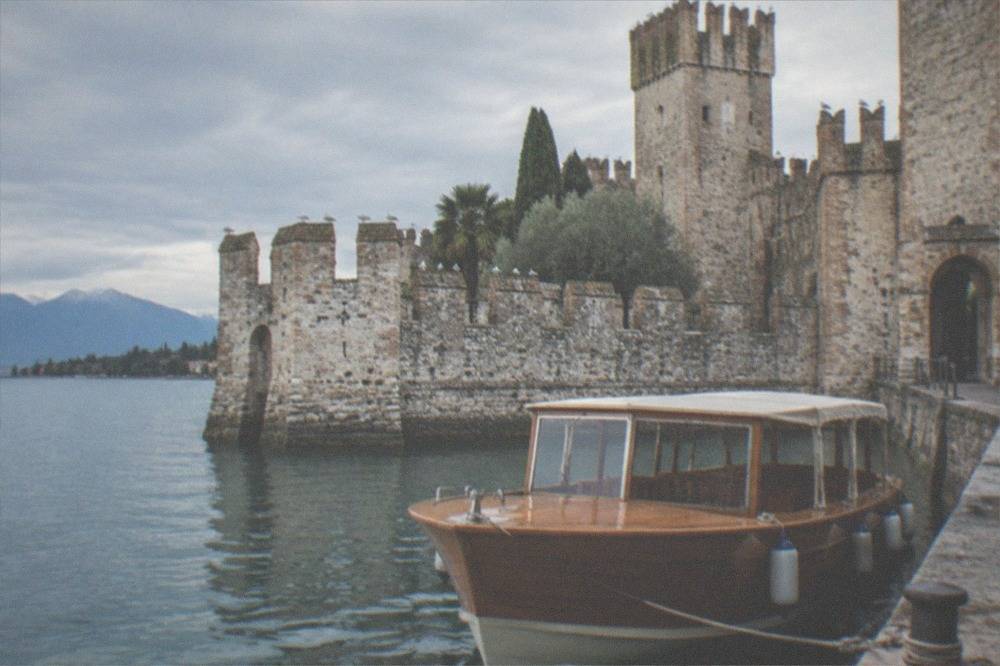
Whichever you pick, book the morning of a weekday if your dates are flexible, and remember that every tour on the peninsula is a weather-dependent product: the listings carry free cancellation, and the operators run on the lake's conditions, not a fixed schedule. That is the whole decision, and it is a good one to have. A town this crowded, this small and this expensive to park in is exactly the place where a 13.77-dollar boat loop is not a tourist trap but the most efficient sightseeing on the lake.
Common Questions About Sirmione
Is Sirmione Worth Visiting?
Yes. The castle, the Roman villa and the peninsula tip justify the trip on their own, and the boat loop from 13.77 dollars per person shows you all three even on the most crowded days. Go before 10:00 or after 18:00, or arrive by ferry, and the crowds stop being the story.
How much are the castle and the Grotte di Catullo?
Each costs 10 euro full price, with a 2 euro reduced rate for EU visitors aged 18 to 25. A combined ticket at 20 euro covers the castle, the Grotte di Catullo and the Villa Romana in Desenzano, valid for seven days.
Can I drive into the Sirmione old town?
The historic centre is a restricted traffic zone under summer rules from 23 March to 13 October 2026, and access requires prior authorisation with your number plate registered. On 31 published pedestrianisation days the centre is closed to all private vehicles between 14:00 and 19:00. Park outside the zone and walk or take the shuttle.
How do I get to Sirmione without a car?
Take the train to Desenzano del Garda-Sirmione or Peschiera del Garda and connect by ferry. Desenzano to Sirmione is 3.50 euro one way and takes about 20 to 25 minutes; Peschiera to Sirmione is 6.00 euro. Both stations are about a 15-minute walk from their ferry landings.
How long does the boat tour around the peninsula take?
The shared loop takes 25 minutes and starts from 13.77 dollars per person. A guided 30-minute version starts from 16.07 dollars, and the full boat, villa and walking combination runs 3.5 hours from 109.02 dollars per person.
When is Sirmione quietest?
Before 10:00 and after 18:00. The 31 pedestrianisation days in 2026 concentrate on spring holidays and summer weekend afternoons between 14:00 and 19:00, so mornings are the reliable window even on peak days.